
Philosophy for Beginners: A Historical and Philological Study of the Ancient Syriac Translations of Aristotle’s „Categories“
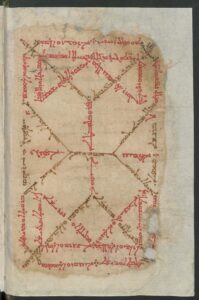
Aristotle’s Categories held a central and influential place in the educational system of late antiquity. Together with Porphyry’s Isagoge, an important introduction to Aristotle’s ideas, it formed the foundation of philosophical study in the Greek-speaking world. These two texts were typically the first ones students encountered when learning logic and philosophy. Remarkably, the Categories often became the only Greek philosophical text to be taught and studied in Christian schools across the Middle East, especially in regions where Syriac—a dialect of Aramaic—was the main scholarly language. The study of existing Syriac translations of the Categories offers a unique window into how Greek philosophy was understood, interpreted, and taught in the Christian East. These translations are not just copies; they are evidence of a centuries-long intellectual exchange between the Greek and Syriac traditions. Produced between the 6th and 8th centuries, the Syriac versions were based on Greek manuscripts that have since been lost. Because of this, the Syriac texts may preserve readings that are earlier than any of the surviving Greek manuscripts, giving us access to an older form of Aristotle’s thought than we currently possess in Greek.
This project has two major goals. First, it aims to provide the first comprehensive scholarly study of all the surviving Syriac translations of the Categories. This will establish a firm basis for comparing these Syriac versions with one another and with the extant Greek text. As part of this research, the project will also develop an open-access digital database that documents the differences between the versions. This tool will allow scholars to trace how Aristotle’s text was transmitted, interpreted, and sometimes adapted over time, helping to integrate the Syriac evidence into the broader history of the Categories. Secondly, the project will make an important contribution to our understanding of Christian philosophical education in late antiquity and the early medieval period. It will shed light on how Aristotle’s logical writings, especially the Categories, were used in Christian contexts and how they shaped intellectual life in Syriac-speaking communities. The project’s outcomes will benefit historians of philosophy and specialists in ancient logic, offering new tools for studying Aristotle’s work. Just as importantly, it will help fill a significant gap in the history of philosophy by highlighting the critical—but often underappreciated—role that Oriental Christian scholars played in preserving, interpreting, and passing on Greek philosophical texts.
By bringing this material to light, the project will enrich our understanding of the cross-cultural transmission of knowledge and the shared intellectual heritage of the Greek and Syriac worlds.
Principal Investigator: Yury Arzhanov
Project Website