„Middle Eastern Christians and Europe: Diasporas – Relations – Entangled Histories“
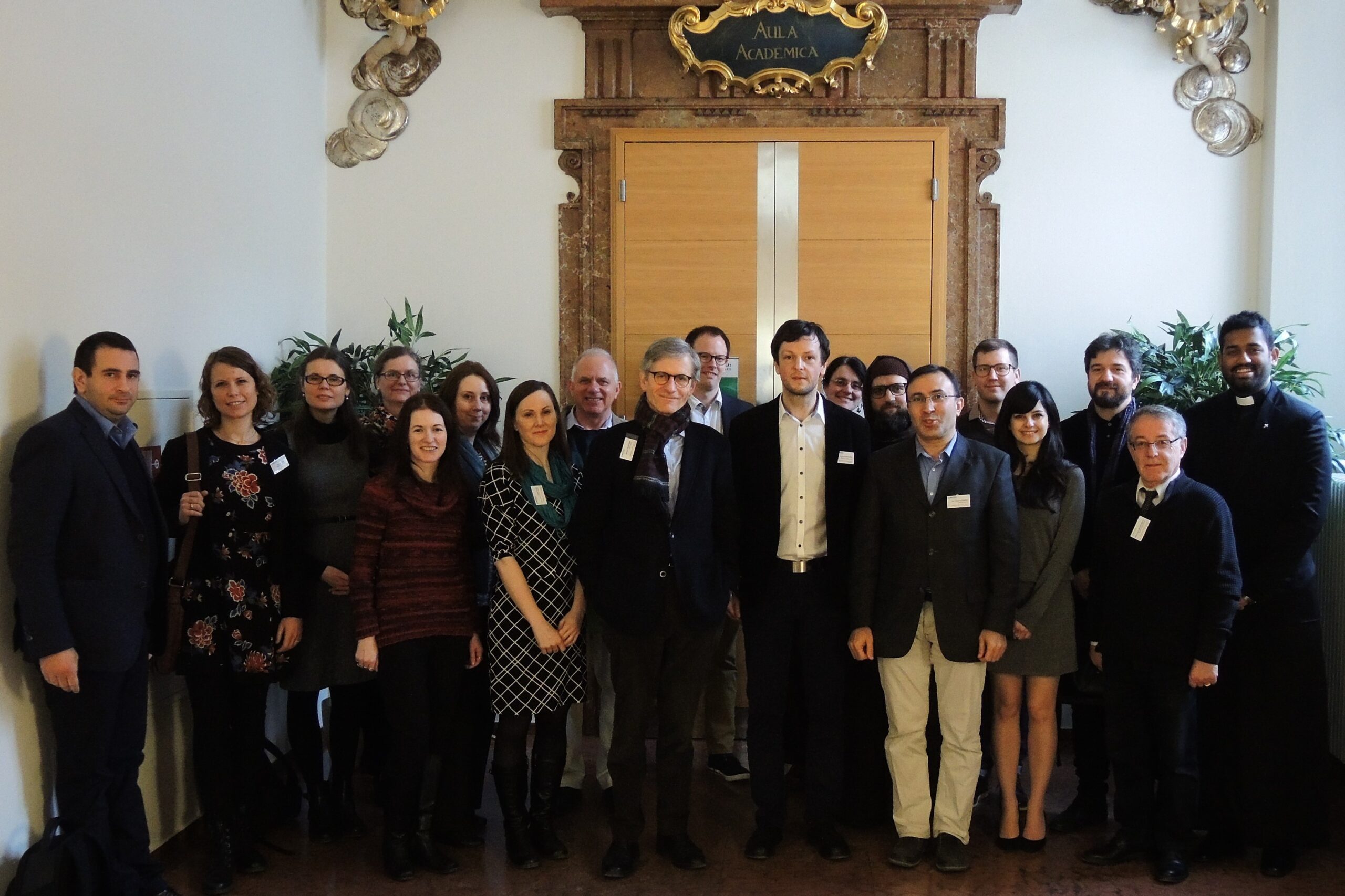
Die Workshop-Teilnehmerinnen und -Teilnehmer (Foto: Andreas Schmoller)
On 18 and 19 February 2016 the ZECO (Zentrum zur Erforschung des Christlichen Ostens – Center for the Study of Eastern Christianity) at the University of Salzburg has organized the workshop „Middle Eastern Christians and Europe: Diasporas – Entangled Histories – Relations“. The interdisciplinary exchange among researchers from across the humanities, social sciences and theology included 18 speakers from 14 countries. The event provided a forum for networking among established researchers and professors as well as post-graduates and young post-docs in a field, which remained a blank spot on the map of many disciplines for a long time. The program included case studies on diasporas of Middle Eastern Christian Churches in Great Britain, Sweden, Denmark and Austria as well as research on the historical relationships between Oriental Christians and Europe, that encode current (self-)perceptions in the Middle East and in Europe. In his keynote speech Prof. Bernard Heyberger, who teaches history of Middle Eastern Christians at the École des Hautes Études en Sciences Sociales in Paris, explored the long history of protection of Middle Eastern Christians through Europe. This cannot be reduced to the issue of diplomacy and security policy, but it also includes the circulation of people and knowledge between East and West since the 16th century and ideological appropriations in the 19th century. One panel focused on the entanglement of Europe and the Middle Eastern Christians through Western missions, education and humanitarianism in the 19th and 20th Century. Each day of the workshop included a thematically open panel for current projects and research related to contemporary issues in the field. The idea for this workshop resulted from the growing consciousness that Middle Eastern Christians exist in two forms: as heterogeneous globally dispersed communities on the one hand and as imagined symbolic community constructed through projections and discourses on the other hand. The event at the ZECO explored these two realities by bringing together historical and current perspectives on Middle Eastern Christians in order to define their place and role in Europe.