MORPHOPHYSICS
Group Members
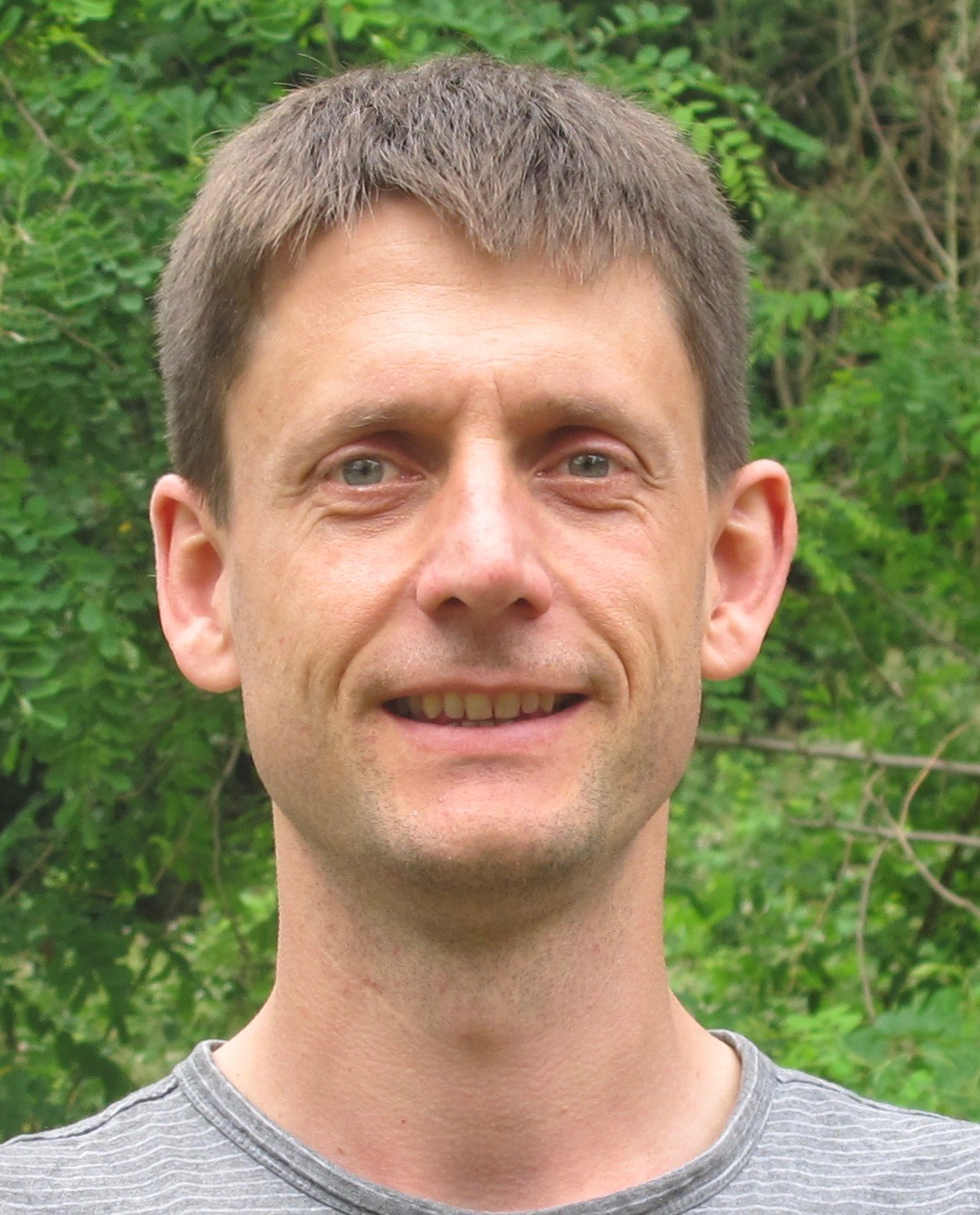
John Dunlop
Group Leader (Raumnummer: 2.OG.24)
Jakob-Haringer-Straße 2A, 5020 Salzburg, Austria
Tel.: +43 (0) 662 8044 6203
E-Mail:
Web: https://uni-salzburg.elsevierpure.com/en/persons/john-dunlop-4
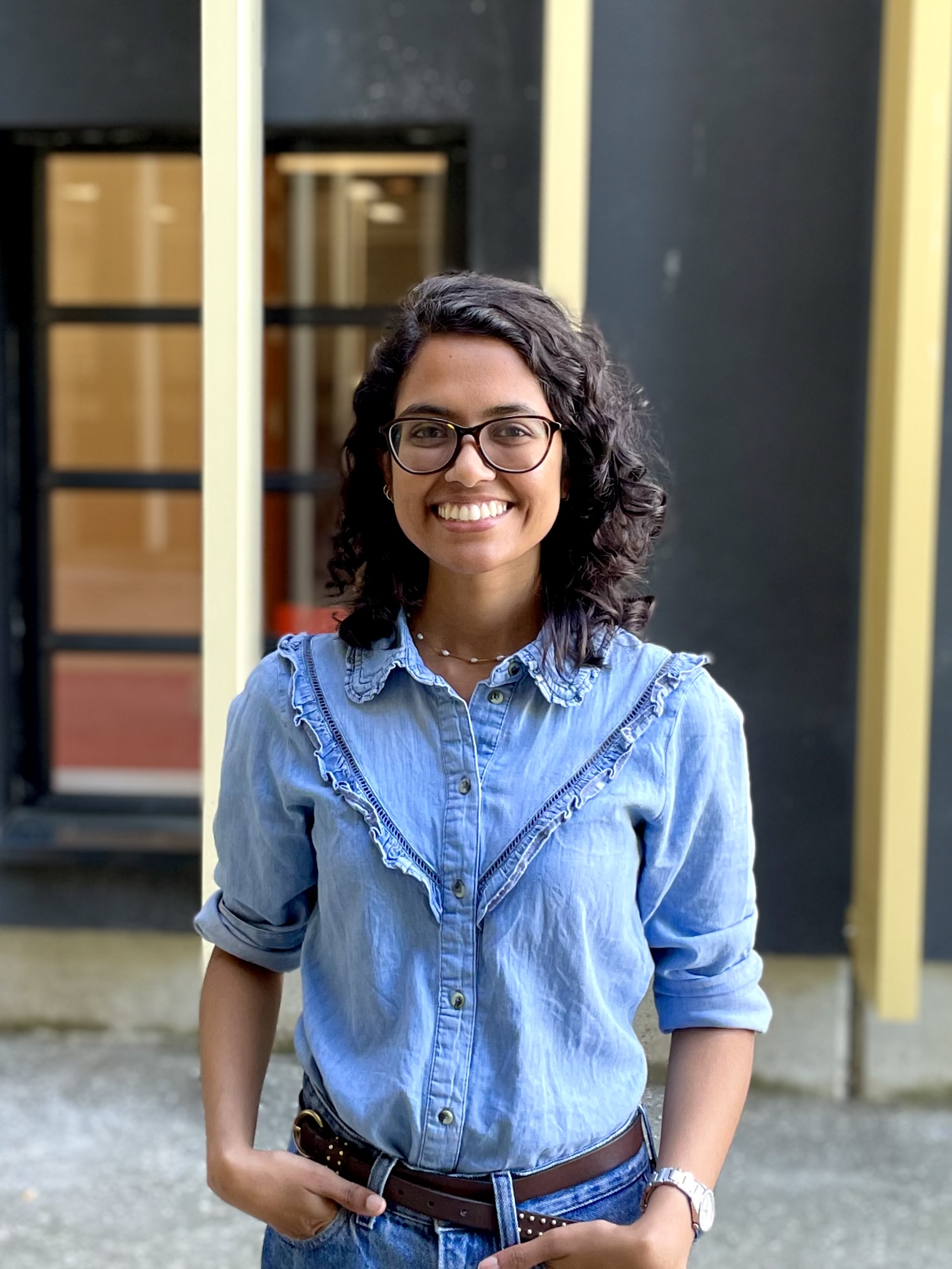
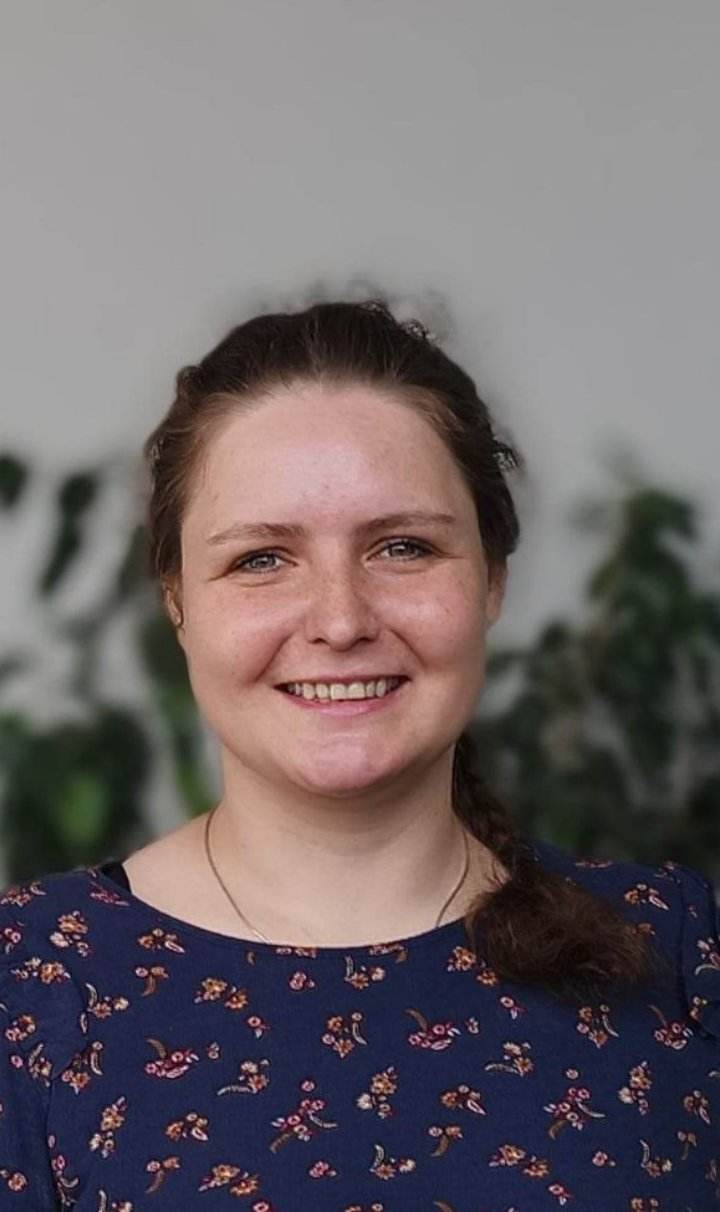
Paula Belska
PhD Candidate
Jakob-Haringer-Straße 2A, 5020 Salzburg
Web: https://uni-salzburg.elsevierpure.com/en/persons/paula-belska

Heidi Pertl-Obermeyer
Senior Scientist / Post Doc (Raumnummer: 6.OG.14)
Jakob-Haringer-Straße 2A, 5020 Salzburg
Tel.: +43 (0) 662 8044 6206
E-Mail:
Web: https://uni-salzburg.elsevierpure.com/en/persons/adelheid-pertl-obermeyer-5
Andreas Roschger
Post Doc (Raumnummer: 6.OG.09)
Jakob-Haringer-Straße 2A, 5020 Salzburg
Tel.: +43 (0) 662 8044 – 6205
E-Mail:
Web: https://uni-salzburg.elsevierpure.com/en/persons/andreas-roschger-5
Corinna Voit
Masters Student
Daniel Karl-Huber
Masters Student
Nicole Kasalo
Masters Student
Saad Tahiri
Masters Student
ALUMNI
PhD
- Tiago Pires (2025), Bone scaffolds optimization for a better relation between geometry and cell growth, Universidade de Lisboa, Instituto Superior Tecnico, co-supervised together with André Castro and Paulo Fernandes.
- Barbara Schamberger (2022), Formation of twisted plywood-like tissue by MC3T3-E1 cells on curved surfaces, University of Salzburg.
Superivsed at the Department of Biomaterials, Max Planck Institute of Colloids and Interfaces, Potsdam, Germany
- Livnat Landau (2020), Mechanical stimulation of in-vitro tissue growth using magnetic beads, Potsdam University.
- Melis Goktas, (2019), Coiled Coils as Molecular Forces Sensors for the Extracellular Matrix, (co-supervised with Kerstin Blank) Potsdam University.
- Huijuin Lin, (2017), Acceleration and Amplification of Biomimetic Actuation: The Empty Pore Matters, (co-supervised with Jiayin Yuan) Potsdam University.
- Sebastian Ehrig, (2017), 3D curvature and its influence on tissue organization, Potsdam University.
- Yulia Zhukova, (2017), Surface nanostructuring for cell and tissue growth, (co-supervised with Katja-Skorb), Free University Berlin.
- Sébastien Turcaud, (2015) Some new patterns of shape changes controlled by eigenstrain architectures, Institut National Polytechnique de Grenoble.
- Lorenzo Guiducci, (2014), Material architecture and differential swelling as design rules in natural and biomimetic passive actuators, Potsdam University
- Cécile Bidan, (2012), Geometric Control of Tissue Growth and Formation, Potsdam University.
- Leonardo Galvis, (2012), Raman spectroscopy investigation of organic matrix orientation and chemistry changes during fracture healing, TU-Berlin.
- Krishna Prasad Kommareddy, (2010), The influence of scaffold stiffness, geometry and growth factor on the kinetics of osteoblast tissue growth in-vitro, Free-University Berlin, (Started PhD in the group of Manjubala Inderchand and completed the last 6 months in our group)
Masters
2025
- Fabian Siebler, Grain Boundaries in Gyroid Structures and their Influence on Mechanical Properties
- Stefanie Schindele, Dissolving the insolvable:Stepwise solubilization of the biopolymer Sporopollenin in ionic liquids
2023
- Jan Piotraske, Modelling Swarming Behaviour on Curved Surfaces, Humboldt University
- Michael Untersteiner (with Stratec), Functional Coatings of Microfluidic Chips
- Brooke Slade, Tissue Growth and Orientation on Cylindrical Surfaces
- Chloe Jones, Emerging Three-Dimensional Tissue Growth on Surfaces of Non-Constant Mean Curvature
2020
- Raghed Restom (2020), 3D image analysis of carbon and silica porous materials, University of Salzburg.
2019
- Marcel Moser (2019), Improvement of Electrode Printing on Microfluidic Chips, University of Salzburg
- Bárbara Marin (2019), Vernacular Biomimetics, Humboldt University
2017 and before
Superivsed at the Department of Biomaterials, Max Planck Institute of Colloids and Interfaces, Potsdam, Germany
- Cornelius Müller, (2017), The role of surface curvature on cell-migration, Humboldt University, Germany
- Alan West, (2015), The role of the mechanical environment in tissue growth and tissue engineering, University of New South Wales, Australia
- Sébastien Turcaud, (2010), A micromechanical investigation of the mechanical design principals of helical actuation in the seeds of Erodium grunium, Ecole des Ponts, Paris, France
- Cécile Bidan, (2009), Curvature controlled tissue growth in hydroxyapatite scaffolds, INP Grenoble, France
Bachelor
- Lion Rainer (2025), 3D Shape of Tissue grown on Capillary Bridges, University of Salzburg
- Jakob Plappert (2025), Finite Element Simulation of Tree Branch Growth, University of Salzburg
- Max Moderegger (2025), Exploring the role of fiber orientation and external geometry on the actuation of seed capsules, University of Salzburg
- Marlene Krüger (2025), Kohlenhydratabfall als nachhaltige Ressource zur Produktion von Mikroalgenlipiden, University of Salzburg
- Sarah Felbermair (2025), Nachweismethoden von Mykoplasmenkontaminationen in Zellkulturen, University of Salzburg
- David Lenz (2025), The influence of substrate curvature on cell mechanics-A Finite Element Analysis, University of Salzburg
- Eva-Marie Sauerlachner (2024), Bestimmung des Lipidgehalts in Mikroalgen durch Fluoreszenzmikroskopie, University of Salzburg
- Nilves Kovacevik, (2024), Finite-Element Modellierung von Mehrschicht-Aktuatoren – Anwendungen auf den Öffnungsmechanismus von Banksia-Follikeln, University of Salzburg
- Lisa Mainz, (2024), Biochemischer Überblick über Knochen und die Knochenstoffwechselkrankheit Hypophosphatasie, University of Salzburg
- Johanna Grimm (2024), Quantifizierung von Lipiden aus Mikroalgen mit der Sulfo-Phospho-Vanillin-Methode, University of Salzburg
- Felicitas Hartwick (2024), Analyse und Vergleich der dreidimensionalen Struktur von Pflanzensamen fünf ausgewählter alpiner Pflanzen, University of Salzburg
- Anna Brandt (2024), Extraktion des Biopolymers Sporopollenin mittels einer ionischen Flüssigkeit, University of Salzburg
- Corinna Voit (2023), Enzymatische Extraktion und Charakterisierung von Sporopollenin aus Lilienpollen mittles ATR-FTIR, University of Salzburg
- Florian Mortier (2023), Kontrolle des Wachstums von Mikroalgen in 3D Hydrogel Strukturen, University of Salzburg
- Anna Juppe (2023) Exploring the role of the end-cap geometry on the equilibrium shape of capillary bridges, University of Salzburg
- Teresa Schyska (2023, with Rosenberger), Einflüsse der Einstellparameter beim Ultraschallschweißen von Hochvolt- Verbindungssystemen auf die dynamische Beanspruchung des Kontaktteils, University of Salzburg
- David Tillian (2023) Learning from nature Is natural spider silk better than industrial spider silk and how it can be used in medical application?, University of Salzburg
- Vanessa Auer (2022, co-supervisor with Andreas Traweger), Die Auswirkungen von Hydratisierung auf die biomechanischen Eigenschaften von Flexorsehnen der Maus (Mus musculus), Paracelsus Medical University and University of Salzburg.
- Manfred Meister (2022, with Stefan Dötterl), 3D functional morphology of individuals in the genus Bombus and its potential effects on their behaviour, University of Salzburg
- Christian Esser (2022, with Gerhard Obermeyer and Paolo Sereni), Automatic monitoring system for plant phenotyping in connection with IoT, University of Salzburg
- Karim Kherfi (2021), Modelling Tissue Growth on Curved Surfaces, University of Salzburg
- Lucas Heiduczek (2021), Stabilitat Wachsender Flüssigkeiten, University of Salzburg
- Florian Kaufman (2021), Swellable cells – mechanical actuators inspired by plants, University of Salzburg
- Fabian Hartmann (2021), Analyse der mikrobiellen Belastung fasergeformter Lebensmittelverpackungen einer „Natureformer“ – Maschine der Kiefel GmbH, University of Salzburg + Kiefel GmBH
- Maximilian Zagler (BSc -Nowofol, WS 2020), Untersuchung der Kompostierbarkeit von unidirektional verstreckten PLA Folien unter Berücksichtigung der spezifischen prozessbedingten Folienstruktur und rezeptiver Einflüsse, University of Salzburg + Nowofol GmBH
- Michael Untersteiner (2020), Bonding possibilities of SiOx-coated COP microfluidic chips, University of Salzburg
- Max Sesselmann (2020), Establishing a method to 3D-print hydrogels as a basis for 3D-printing plant cells, University of Salzburg
- Florian Kapeller (2020), Investigating the mechanics of hydrogels with light sheet microscopy, University of Salzburg
- Leilani Tam von Berg (2020), Developing a system to allow controlled geometry changes for cell culture, University of Salzburg
- Robert Wenig (2020), Dynamische Untersuchung von Byssusfäden in Küstenregionen durch Simulationen, University of Salzburg
- Lukas Lacher (2019), Using mechanical instabilities to create micro-patterned surfaces, University of Salzburg
- Michael Groher, (2019) Erstellung eines Zellparcours, University of Salzburg
- Alejandro Diaz Bandres, (2019) Experimental Modal Analysis of two guitars with different body geometries, University of Salzburg
- Stephanie Achatz, (2019) Entwicklung dynamisch gekrümmter Oberflächen für Zellkulturen, University of Salzburg
- Vanesa Gering, (2012) Organisation principles of bone-like tissue grown in-vitro, Technische Hochschule Wildau