Romana Sammern
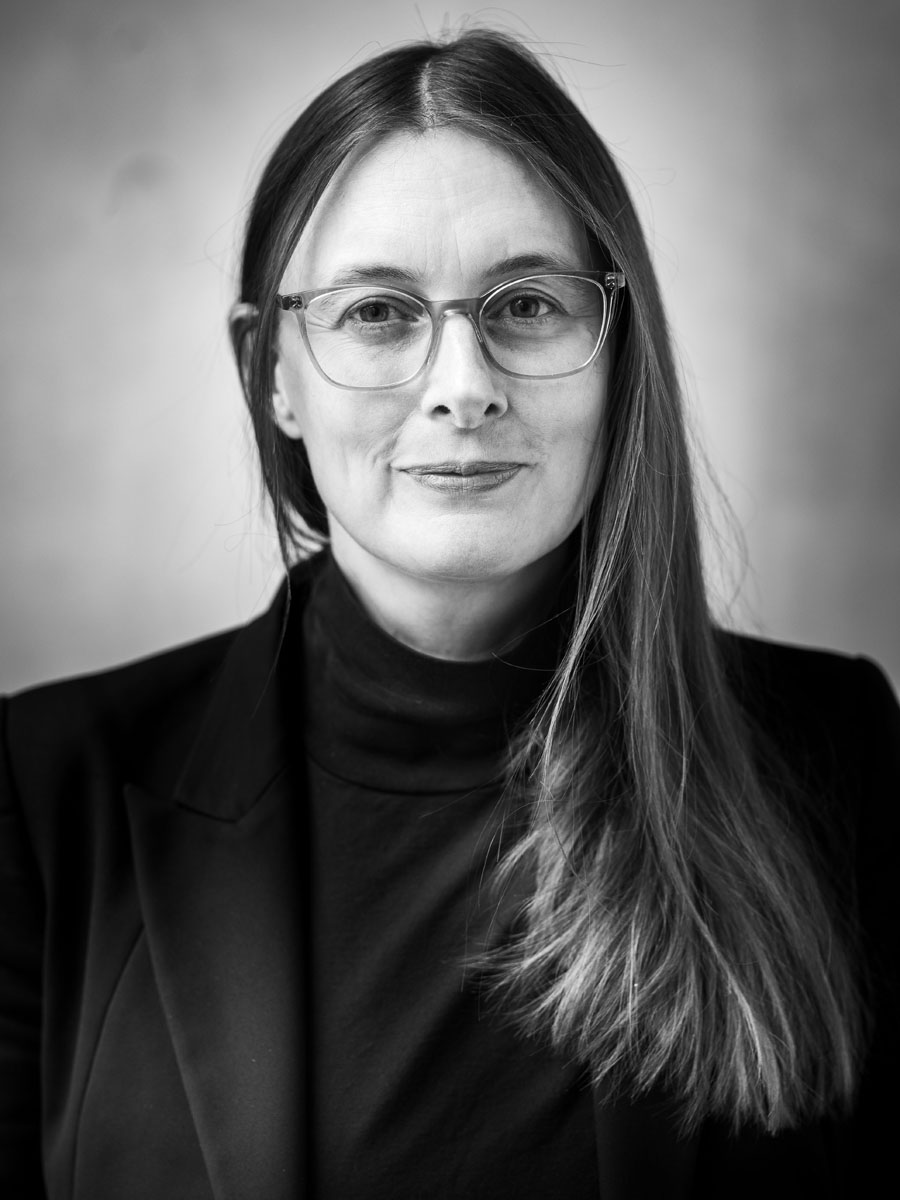
Dr Romana habil. Sammern
Research Fellow
Unipark Nonntal, Erzabt-Klotz-Str. 1, Room 2.122, 5020 Salzburg
Tel.: +43 (0) 662 / 8044-4665
E-Mail:
Office Hours
Please email Ms Sammern to arrange an appointment.
Research Interests
-
European art history, 1300–1800
-
Image, body, and sexuality
-
Historical concepts and practices of beauty and ugliness
-
Material studies
-
Medical humanities
-
Visual literacy
Biography
Romana Sammern studied History, Cultural Studies, and Art History in Salzburg, Vienna, and Berlin. She completed her degree with a thesis on migration history, focusing on the factory settlement in Lend (Pinzgau, Salzburg). From 2006 to 2007, she was a Junior Fellow at the International Research Center for Cultural Studies in Vienna. Between 2007 and 2011, she worked as a research assistant in the Photothek of the Kunsthistorisches Institut in Florence – Max Planck Institute. In 2011, she received her PhD from Humboldt University in Berlin with a dissertation on the visual representation of prostitutes in the 17th and 18th centuries (published as Hurenbilder, Böhlau 2014). From 2012 to 2013, she pursued her project Original/Copy. History and Genesis of the Dualism, 1500–1750 at the Kunsthistorisches Institut in Florence – Max Planck Institute, funded by the Fritz Thyssen Foundation for the Promotion of Science. As part of the FWF Herta Firnberg Programme, she conducted research at the Department of Art History, University of Salzburg (2013–2018) with her project Face and Image, exploring the relationship between art and cosmetics at the intersection of art history and the history of science. She continued this project in 2021 within the framework of the FWF Elise Richter Programme. Since 2019, she has also served as academic programme coordinator of the research area Figurations of Transition within the inter-university cooperation Science & Art between the University of Salzburg and the Mozarteum University. In 2024, she completed her habilitation on “Beauty, Art, and the Body in the Early Modern Period” at the University of Passau.
Publications
Hurenbilder. Ein Motiv in der Druckgraphik des 17. und 18. Jahrhunderts, Cologne 2014 (PhD thesis, Humboldt University Berlin, 2011).
Schönheit – Der Körper als Kunstprodukt. Kommentierte Quellentexte von Cicero bis Goya, Berlin 2019, open access. DOI: http://books.ub.uni-heidelberg.de/arthistoricum/catalog/book/425 (with Julia Saviello).
“Cupid and the Bear. Emblems of Creation and Images of Seduction in Sixteenth-Century Art Writing and Love Imagery.” In: Angeliki Pollali and Berthold Hub (eds.), Images of Sex and Desire in Renaissance Thought and Modern Historiography, London et al. 2017, pp. 99–113. Open access: https://doi.org/10.11588/artdok.00006562.
“Red, White, and Black: Colors of Beauty, Tints of Health, and Cosmetic Materials in Early Modern English Art Writing.” In: Early Science and Medicine 20 (2015), pp. 397–427. Open access: http://dx.doi.org/10.1163/15733823-02046p05.
“Von der Fleischfarbe zur Hautfarbe. Firenzuola, Dolce, Mercuriale und Mancini zum Weißsein in den Künsten des 16. Jahrhunderts.” In: WerkstattGeschichte 89 (2024), pp. 17–35. DOI: https://doi.org/10.14361/zwg-2024-890103.
“Cosmetics, Art, and the Body: The Beauty Culture of Philippine Welser at Ambras Castle.” In: Christina Antenhofer (ed.), Bäder, Innsbruck: Innsbruck University Press, pp. 115–133 (forthcoming).