Ingonda Hannesschläger
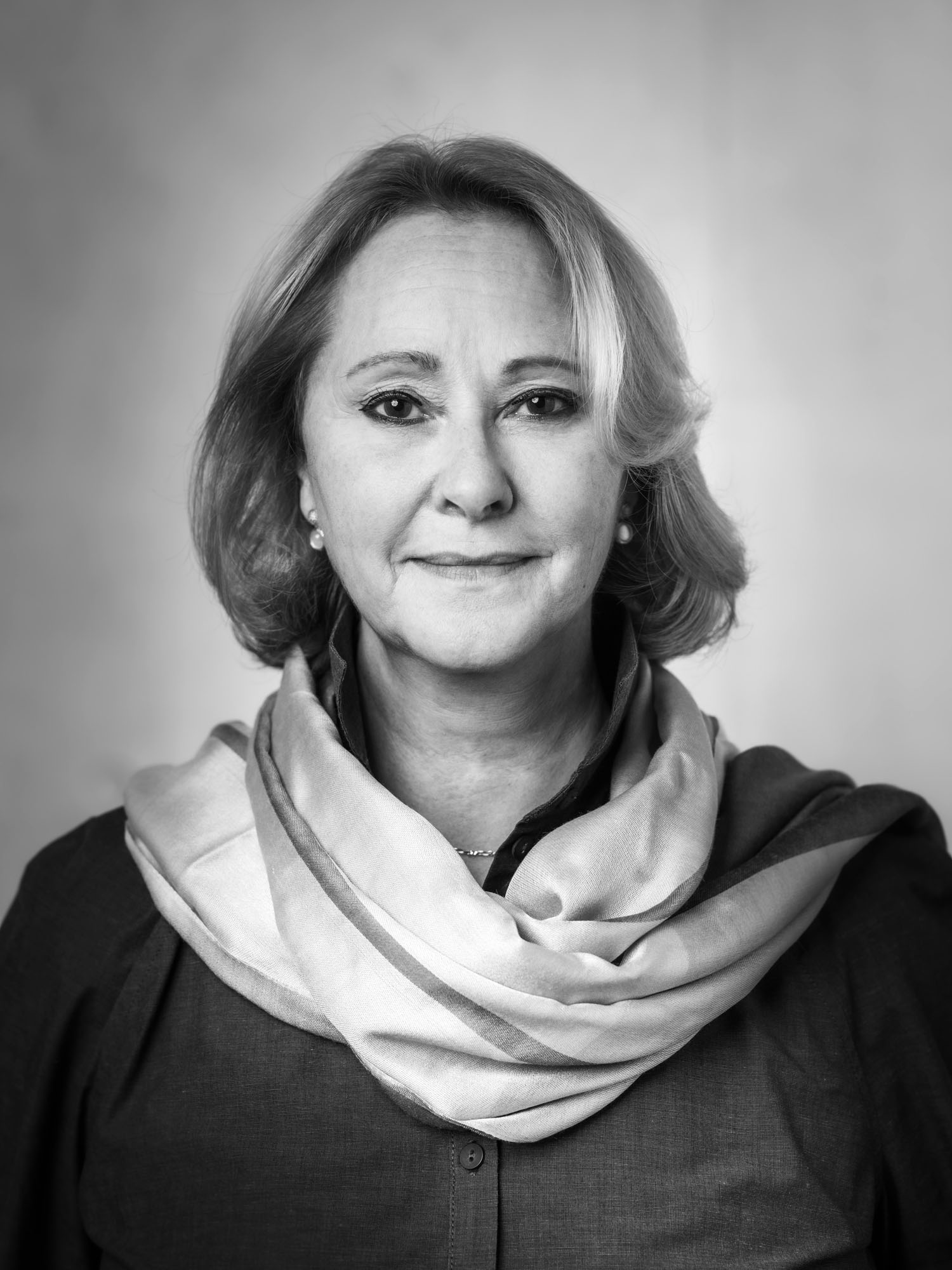
Dr. Ingonda Hannesschläger
Chair of the Department’s Curriculum Committee
Unipark Nonntal, Erzabt-Klotz-Straße 1, Room 2.426, 5020 Salzburg
Tel.: +43 (0)662/ 8044 4616
E-Mail:
Office Hours
Tuesday, 14:00–15:00
The office hour takes place on site in Ms Hannesschläger’s office (Room 2.426).
How to book: Please email Ms Hannesschläger to arrange an appointment.
Research Interests
-
Art and decorative arts of Historicism
-
Italian art (with a focus on 1300–1600 and the reception of antiquity)
-
Interdisciplinary projects and publications on Salzburg and cultural exchange between Italy and the North, as well as courts as agents of social, economic, and cultural developments
-
Architectural and interior history of monastic buildings and residences at the transition from the Middle Ages to the Early Modern period
-
Collection history and provenance research
Biography
Ingonda Hannesschläger studied Art History and Law in Salzburg. From 1986 onwards, she received scholarships and undertook research stays and projects in Rome/Vatican and Italy. Her theses (MA 1990, PhD 1995) focused on 19th-century phenomena in the collections of the Vatican Library, particularly manuscript illumination. Beginning in 1986, she held ongoing contracts at the Salzburg State Archive; from 1989, she worked as an assistant at the Institute of Art History at the University of Salzburg, and from 1990 to 1997 she also taught as a lecturer at the Mozarteum University Salzburg. Between 2000 and 2002, she conducted research at the Bibliotheca Hertziana in Rome on Dominican Observant convents in Italy, supported by an Erwin Schrödinger Fellowship from the Austrian Science Fund (FWF).
Since 2002, Ingonda Hannesschläger has been Assistant Professor at the Department of Art History, University of Salzburg.
In 2011, she received the Special Prize of the Cultural Fund of the City of Salzburg for the project “Strategien der Macht. Hof und Residenz in Salzburg um 1600” (Strategies of Power. Court and Residence in Salzburg around 1600) together with Ao. Prof. Dr. Gerhard Ammerer.
Publications
Die Hauskapelle von Erzbischof Friedrich Fürst zu Schwarzenberg (1809–1885) in der Salzburger Residenz. Ein Beitrag zum Schicksal der Residenz und der Erzbischöfe nach der Säkularisation, in: Ammerer Gerhard, Ingonda Hannesschläger, Jan Paul Niederkorn, Wolfgang Wüst (Hg.): Höfe und Residenzen geistlicher Fürsten. Strukturen, Regionen und Salzburgs Beispiel in Mittelalter und Neuzeit. Ergebnisse der internationalen und interdisziplinären Tagung in der Salzburger Residenz 19.–22. Februar 2009, Ostfildern 2010 (Residenzenforschung 24), 503–522.
Strategien der Macht. Hof und Residenz in Salzburg um 1600. Architektur, Repräsentation und Verwaltung unter Fürsterzbischof Wolf Dietrich von Raitenau, 1587-1611/12, Salzburg 2011 (28. Ergänzungsband der Mitteilungen der Salzburger Landeskunde) (in collaboration with Gerhard Ammerer)
Salzburg und Venedig – Netzwerkstrukturen als Basis kulturellen und künstlerischen Austauschs. Elia Castello und Vincenzo Scamozzi, in: Ammerer, Gerhard, Ingonda Hannesschläger, Thomas Hochradner (Hg.): Von Venedig nach Salzburg. Spurenlese eines vielschichtigen Transfers, Wien 2015 (Veröffentlichung der Forschungsplattform Salzburger Musikgeschichte 3), 38–65.
Jakob Hannibal II. Graf von Hohenems. Familiäre Verflechtung als Grundlage innereuropäischer Kommunikation, in: Ammerer, Gerhard, Ingonda Hannesschläger, Milan Hlavačka, Martin Holy (Hg.): Präzedenz, Netzwerke und Transfers. Kommunikationsstrukturen von Herrscherhöfen und Adelsresidenzen in der Frühen Neuzeit, Leipzig 2016, 73–98 (in collaboration with Jutta Baumgartner).
Das Große Festspielhaus. Clemens Holzmeisters Gesamtkunstwerk (Kunststandort Salzburg²), Salzburg 2018 (in collaboration with Andrea Gottdang).
Functions
Member of the Board of Directors of the Cathedral Museum Salzburg (DomQuartier Salzburg)
Member of the Executive Board of the Salzburg Association for Regional Studies
Further information can be found on Ingonda Hannesschläger’s PLUS Research page.