Geosciences Colloquium
at the Department of Environment and Biodiversity
Presentations by collegues from research and industry on topics in the geosciences and related subject areas, followed by a plenary discussion. The colloquium takes place during semester time. Everyone is welcome!
5pm, Tuesday, 23rd June 2026
HS 434, (3rd Floor) NLW, PLUS, Hellbrunnerstraße 34, Salzburg
Unterschätzte Gefahr Hangschichtwasser: Bauschäden, Kostenfallen und Lehren aus der Praxis
Dr. Christian Uhlir, Universität Salzburg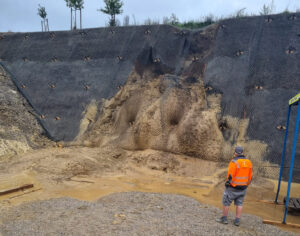
Die Präsentation behandelt die Gefahren von Hangschichtwasser bei Bauprojekten. Dabei handelt es sich um oberflächennahes Grundwasser, das über wasserstauenden Schichten meist lokal abfließt. Es ist tückisch, da es stark schwankt, bei Trockenheit oft völlig verschwindet und daher bei StandardBaugrunderkundungen (z. B. punktuellen Bohrungen) häufig übersehen wird. Tritt es bei Starkregen plötzlich auf, kann es zu massiver Erosion, hydraulischem Grundbruch und Vernässung von Nachbargrundstücken führen. Anhand von drei Projekten werden die fatalen Folgen von Fehleinschätzungen demonstriert: Rehrlplatz am Kapuzinerberg (Salzburg): Eine Baugrube wurde mit einer dichten Bohrpfahlwand ohne Drainage gesichert. Diese wirkte als Barriere für das Hangwasser, was nach Starkregen zu massiven Feuchtigkeitsschäden am benachbarten Palais Neustein führte. Trotz aufwendiger Sanierungsversuche (70 nachträgliche Bohrungen durch die Wand) und Markierungsversuchen, die den Wasserfluss bewiesen, blieb das Problem durch weitere bauliche Barrieren bestehen. Pennymarkt Glontal (Bayern): Hier wurde das Schichtwasser im Vorfeld als “nur lokale Erscheinung” abgetan. Beim Bau einer Spundwand und einer vernagelten Steilböschung kam es bei Starkregen zu massiven Wasseraustritten, Bodenerosion und schließlich zum Versagen der Böschung (hydraulischer Grundbruch). Die aufwendige Sanierung mit Spritzbeton und 70 Drainagerohren verursachte Mehrkosten von ca. 1,5 Millionen Euro. Hanggrundstück Traunleiten (OÖ): Ein genehmigtes Versickerungsprojekt führt das Wasser im Hang lediglich im Kreis. Bei Starkregen droht eine Überlastung, die Nachbargrundstücke schädigen und benachbarte Trinkwasserbrunnen beeinträchtigen könnte.
Online participation here
Contact for further Information: