Research
The Development of Resilient Ecosystems and Landscapes
Resilient ecosystems form the foundation of stable living environments and economic systems. Research at the CC:R uses data‑driven approaches to investigate how natural systems respond to climatic stressors such as rising temperatures, altered precipitation patterns, or extreme events, and how their adaptive and regenerative capacities can be strategically strengthened. Through environmental monitoring, remote sensing, sensor networks, as well as statistical and model‑based analyses, changes in ecosystem functions are detected early, dynamics are better understood, and future scenarios can be simulated.
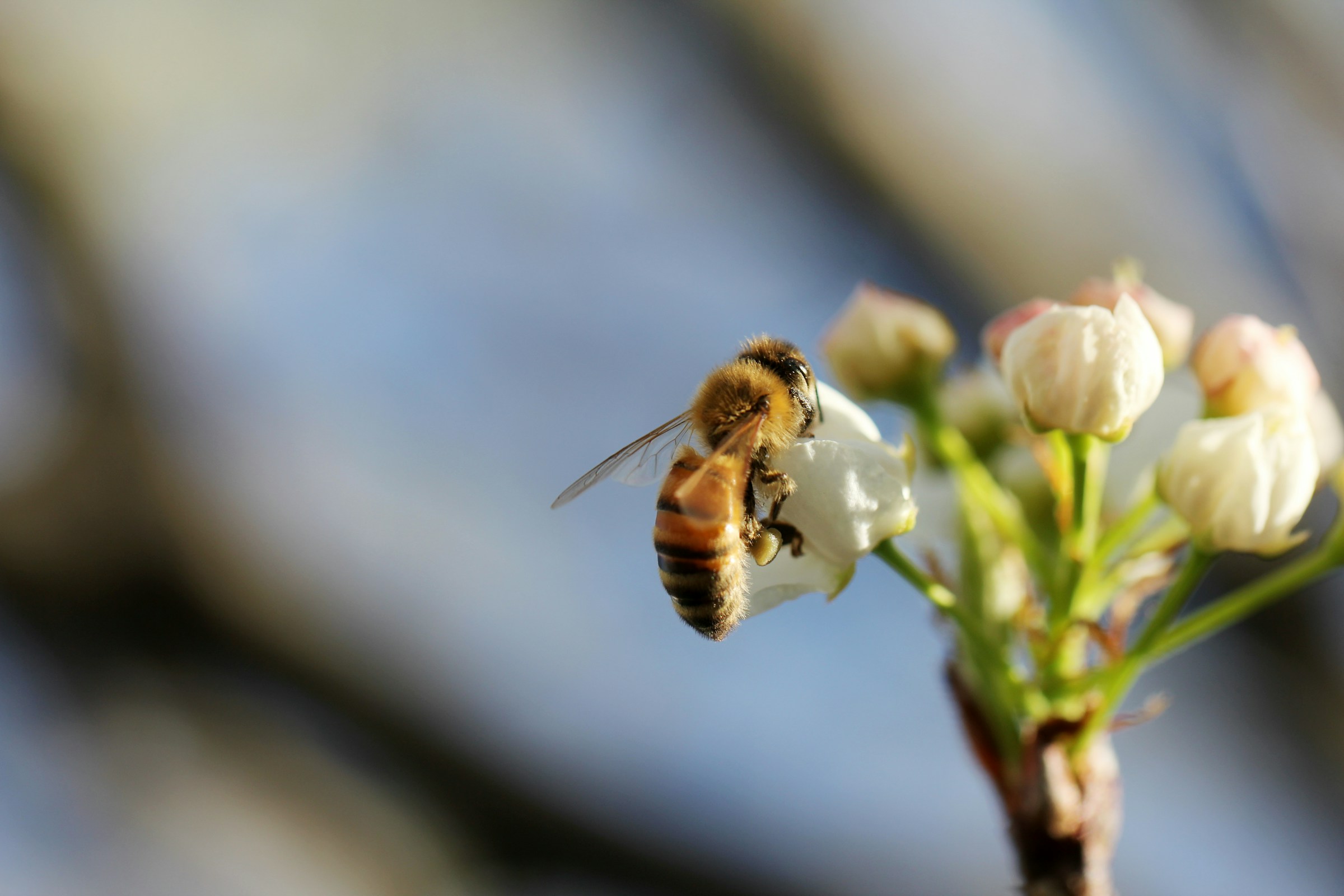
The focus lies on preserving key ecological functions and securing the livelihoods of present and future generations.
Central application areas include biodiversity protection and restoration, climate‑resilient forest and agricultural systems, nature‑based solutions for erosion and flood protection, and data‑informed land‑use and restoration strategies. Particular attention is given to sensitive environments such as mountain regions, aquatic landscapes, and urban–rural transition zones, where climatic changes occur especially rapidly and where precise monitoring and forecasting tools are needed.
By integrating ecological field research with data science, statistical modeling, and spatial analysis, the CC:R connects scientific insights with societal and economic needs. The goal is to create evidence-based foundations for decision‑making, enabling landscapes to be designed in ways that secure ecological functions in the long term, reduce risks, and at the same time support diverse societal needs—such as food security, recreational spaces, and regional value creation.
Research projects funded by the Green2030 Foundation:
- How does climate change affect biodiversity and the functioning of ecosystems?
- What impact does the melting of glaciers and permafrost have on water quality and water availability?
- How can changes in vegetation contribute to increasing carbon storage?
Contact: Univ.-Prof. Dr. Jussi Grießinger,
Technological Resilience
Materials play a central role in the resilience of societies, infrastructures, and economic systems in the context of climate change. Their availability, durability, reusability, and environmental impact significantly determine how resistant buildings, products, and supply systems are to climatic stress, resource scarcity, and disruptions in global supply chains.

Research at the CC:R investigates how materials can be used, developed, and circulated in climate‑ and resource‑compatible ways. The focus lies on durable, repairable, and modular material solutions, the use of renewable and secondary raw materials, and strategies to reduce material and energy consumption throughout the entire life cycle. Ecological impacts, technical performance, and economic feasibility are considered equally.
A particular emphasis is placed on the role of materials in climate‑adapted infrastructure and resilient value‑creation systems—such as in construction, energy supply, or industrial production processes. By combining materials research, circular economy approaches, and system design, the CC:R contributes to building the material foundations for a robust, adaptable, and sustainable future.
Contact: Univ.-Prof. Dr. John Dunlop,
Societal Resilience
Resilience describes the ability of individuals, organizations, and societies to deal constructively with the uncertainties and stresses of climate change, to adapt, and to actively shape the future. The CC:R investigates how psychological stability, risk perception, future visions, and collective agency emerge and can be strengthened. It also studies which factors foster readiness for transformation and how people and communities can be empowered not only to cope with change but to co‑create it.
Closely linked to this is the economic dimension of resilience. The focus is on adaptable, circular business models, robust and diversified value‑creation systems, and circular economic cycles. Research examines how companies and industries respond to climate‑related risks, drive innovation, and secure long‑term stability and competitiveness through sustainable and circular strategies.
Beyond this, the CC:R also explores social and cultural resilience. Social cohesion, solidarity, social networks, and participatory decision‑making processes are crucial for ensuring that transformation processes are fair and inclusive. Cultural values, narratives, knowledge systems, and practices provide orientation, meaning, and future visions that help anchor adaptation and transformation within society.
By integrating these dimensions, the CC:R contributes to understanding and shaping transformation in a holistic way – psychologically strengthening, economically viable, and socially and culturally grounded.