ELEvATE: Elevated low relief landscapes in mountain belts: Active Tectonics or Glacial Reshaping? The Eastern Alps as a Natural Laboratory
The project ELEvATE focused on the evolution of elevated low relief landscapes (plateaus) in active mountain ranges. The project was funded by the Austrian Science Fund (FWF) and the government of Salzburg.
Many mountain ranges are characterised by low relief landscapes at high altitudes. This topographical feature is most evident in plateau mountains, where there is a transition at medium altitudes from increasing to decreasing slope gradients. Two completely opposing hypotheses can be proposed to explain this: 1. Glacial reshaping 2. Fluvial immaturity.
Two adjacent areas were selected for further investgation, one of which was glaciated during the Pleistocene ice ages and the other not. The two areas are perfectly suited for this study as they have the same lithological and structural geology but formed completely different landscapes during the ice ages. The project involved:
(1) mapping of the regional pattern of low-relief and incised landscapes;
(2) determining the age of cave sediments using cosmogenic nuclides in order to calculate the timing and rates of relief formation; and
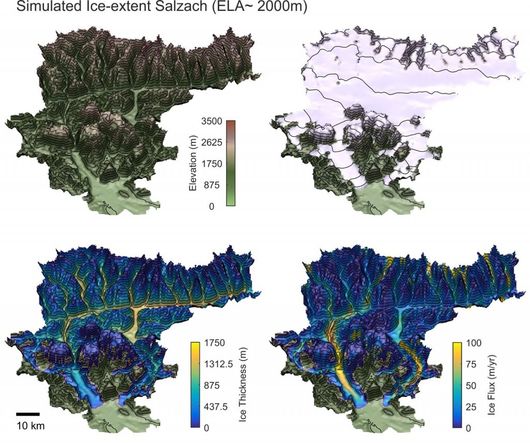
(3) numerical modeling to calculate the time-dependent evolution of low-relief and incised landscapes under fluvial and glacial conditions.