“Zen and the Art of Awakening: Enlightenment in East Asia”
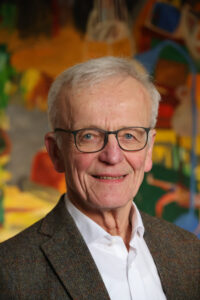
Prof. Helwig Schmidt-Glintzer
University of Tübingen
Tuesday, October 13, 2026, 3:15–4:45 p.m.
HS 888, Sigmund-Haffner-Gasse 18, 3rd floor, Salzburg
At a time when the world is preparing to reorganize itself, it can be helpful to look back to earlier eras. The period around the turn of the first millennium was such a time in East Asia as well as in Europe. A thousand years ago, enlightened thought existed not only in Western Europe but also on the eastern edge of Eurasia. This originated in the debates on direction among the Chinese educational elites, as well as in the search for truth and the desire for salvation among individuals and Buddhist communities in China, Japan, and Korea. The wisdom discovered through these discussions radiated throughout the world as Zen teachings. People sought to integrate the teachings of the Buddha—which had reached China from India—into their own East Asian culture.This Zen movement was a phenomenon that spread throughout China, Korea, and Japan and then to other regions. It was intertwined with colloquial language and written culture and was thus closely tied to Chinese as the written language of East Asia, yet it did not lose its linguistic wit and vitality in the process.
This lecture will explore the turning point in Zen practice between the 10th and 12th centuries. Here we find a key to understanding East Asian spirituality and humanity, the relationship between spoken and written language, and how to deal with the contradictions of the world. The later Confucian upheavals associated with Wang Yangming (c. 1500) and the reform efforts and revolutionary movements at the end of the Qing Dynasty cannot be understood without these early enlightenment traditions. The worldview expressed in Zen is explained against the backdrop of its origins, and the book demonstrates how it could—especially in the present day—empower new ways of acting in the world and help overcome superficial debates.
Helwig Schmidt-Glintzer, born in 1948, is a German sinologist and journalist. From 1967 to 1973, he studied sinology, sociology, and international politics in Göttingen and Munich. After an extended stay in Taiwan and Japan, he completed his habilitation at the University of Bonn in 1979. From 1981 to 1993, he held the Chair of East Asian Cultural and Linguistic Studies at the University of Munich. From 1993 to 2015, he was Professor of East Asian Literature and Cultural Studies at the University of Göttingen and Director of the Herzog August Library in Wolfenbüttel. From 2016 to 2023, he served as a senior professor at the University of Tübingen and as the founding director of the China Centrum Tübingen (CCT). Since 2024, he has headed the EuroAsia Institute for Cultural Systems.
Publications on the topic:China:
A Multiethnic Empire and a Unitary State (1997); A History of Chinese Literature (1999); China’s Empty Center: China’s Identity and Global Modernity (2018); Buddhism (2026);
Buddha: The Life of Siddhartha Gautama (2026).
( Photo: © Frank Ossenbrink)
„The Way of Global Musicology“
Univ.-Prof. Dr. Daniel CHUA
University of Hong Kong
Monday, November 16, 2026, (the exact lecture time will be announced shortly)
Unipark Nonntal, Tanzstudio, Erzabt-Klotz-Straße 1, 5020 Salzburg
Daniel KL CHUA earned his PhD in musicology from Cambridge University and is currently the Chair Professor of music at the University of Hong Kong. Before joining HKU, he was the Director of Studies at St John’s College, Cambridge, and later Professor of Music Theory and Analysis at King’s College London. He was a Visiting Senior Research fellow at Yale (2014-15), a Henry Fellow at Harvard (1992-3), and a Research Fellow at Cambridge (1993-7). He is the recipient of the 2004 Royal Musical Association’s Dent Medal, a Fellow of the American Musicological Society, and a Corresponding Fellow of the British Academy. He served as the President of the International Musicological Society 2017-2022. He was editor of Music & Letters, and is the founding editor of IMS Musicological Brainfood, and the founding co-editor of the California University Press series on global musicology.He has written widely on music – from cosmological concepts in ancient Chinese music theory to NASA’s Golden Record on the Voyager mission – but is particularly known for his work on Beethoven, the history of absolute music, and the intersection between music, philosophy, technology and theology.
He is the author of five books: The ‘Galitzin’ Quartets of Beethoven (Princeton, 1994), Absolute Music and the Construction of Meaning (Cambridge, 1999), Beethoven and Freedom, (Oxford, 2017), Alien Listening: Voyager’s Golden Record and Music From Earth (Zone Books, 2021), and Music and Joy: Lessons on the Good Life (Yale, 2024). His articles include: ‘Rioting With Stravinsky: A Particular Analysis of the Rite of Spring’ (2007), ‘Beethoven’s Other Humanism’ (2009), ‘Listening to the Self: The Shawshank Redemption and the Technology of Music’ (2011), and ‘Global Musicology: A Keynote Without A Key’ (2022). He is currently working on two projects: Rethinking Beethoven and the Enlightenment and T. S. Eliot’s Four Quartets and Beethoven’s Late Quartets.
(Photo: © Wikipedia)
““Health: A Culturally Sensitive Challenge in the Asia-Pacific Region”
Prof. Wolfgang Mastnak, Ph.D.
University of Munich (LMU)
Tuesday, November 24, 2026, 3:15–4:45 p.m.
HS 888, Sigmund-Haffner-Gasse 18, 3rd Floor, Salzburg
In the Asia-Pacific region, health, illness, and healing are closely linked to traditional and ethnic medical systems and philosophies and are also confronted with extremely diverse standards in public health care. With regard to culturally sensitive medicine, the lecture will address artistic therapies as well as the current development of self-help-oriented (WHO) long-term cardiac rehabilitation in China.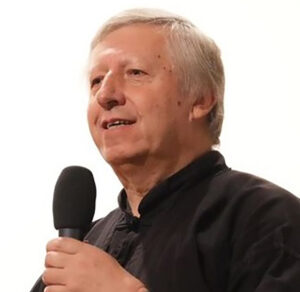
Wolfgang Mastnak is a professor of artistic therapies at Beijing Normal University, a professor of cardiac rehabilitation and psychocardiology at Fudan University in Shanghai, and a professor of music education at the University of Music and Performing Arts Munich. He holds doctorates in medical sciences, sports sciences, mathematics, music education, and artistic therapies, and works primarily in Europe, Asia (the Western Pacific region), and Africa. His main research areas include transcultural artistic therapies, preventive and rehabilitative medicine, ethnomedicine and medical humanities, music education and health, neuroscience and complexity sciences, quantum medicine, and the philosophy of science. Wolfgang Mastnak is a full member of the European Academy of Sciences and Arts and the New York Academy of Sciences. He has published approximately 25 books and 400 scientific articles. His research has received numerous international awards.
(Photo: © Willi Pleschberger)
„From femicide to feminism. Of digital sisters and mother figures in Kyrgyzstan”
Prof. Dr. Judith Beyer
University of Konstanz
Tuesday, December 1, 2026, 3:15–4:45 p.m.
Sigmund-Haffner-Gasse 18, 3rd Floor, HS 888, Salzburg
Since 2010, according to research commissioned by the Open Society Foundation, more than 1,100 women have been killed in Kyrgyzstan, with victims knowing their killer in 75 percent of the cases. Between 2008 and 2024, 350 deaths have been recorded that are classified as femicides by independent local media. I will address this worrisome development and relate it to emergent forms of feminism in the country. As critical forms of expression had to move to the digital sphere due to the increasing authoritarianism in the country – both from state authorities and from young men opposing ‘feminism’ – young women are increasingly speaking out on social media. For several years, I have continually gathered data from public Facebook and Instagram posts, YouTube videos and from campaigns by local NGOs who are addressing femicide and other forms of violence against women in explicitly feminist terms. In my talk, I will focus on the pluralization of ‘feminism’ that I see emerging as a result of these multimodal forms of expression. I will pay particular attention towards how the figure of the ‘mother’ is employed in different settings. This will also allow me to reflect on the anthropologist’s positionality in light of such a contested field where women unite over having to fight male violence, but disagree over the way to go about it.

Judith Beyer is Full Professor of Social and Political Anthropology at the University of Konstanz in Germany. She specializes in political and legal anthropology and has been working in different parts of Central and Southeast Asia for two decades. In Kyrgyzstan, she is currently interested in studying femicides and forms of neo-traditionalization alongside legal pluralism. In Europe, she is carrying out long-term research on statelessness and expert activism. Her ethnographic research in Myanmar on „Rethinking community“ (University of Hawai’i Press, 2024) where she worked with ethno-religious minorities, came to a halt after the attempted military coup of 1 February.
(Photo: © Patrick Pfeiffer)
“China’s Global Ambitions”
Prof. Dr. Eberhard Sandschneider
Freie Universität Berlin
Tuesday, December 15, 2026, 3:15–4:45 p.m.
Sigmund-Haffner-Gasse 18, 3rd Floor, Room 888, Salzburg
After decades of impressive economic development, China is in the process of gradually increasing not only its economic influence but also its geopolitical influence. Building on its economic success, the Chinese government is steadily expanding its institutional network, emphasizing the importance of its own soft power, and unmistakably striving for technological leadership. China’s global ambitions are rooted in these foundations. But what do these developments mean for future geopolitical relations, and how can the West respond?
Eberhard Sandschneider held a professorship in Chinese Politics and International Relations at Freie Universität Berlin from October 1998 to October 2020. Since October 2020, he has been a partner at the consulting firm Berlin Global Advisors. In 1981, he completed his studies in English, Classical Philology, and Political Science at Saarland University in Saarbrücken. He earned his Dr. rer. pol. degree in 1986 with a dissertation on “Military and Politics in the People’s Republic of China, 1969–1985” and completed his habilitation in 1993 with a dissertation on “Stability and Transformation of Political Systems.”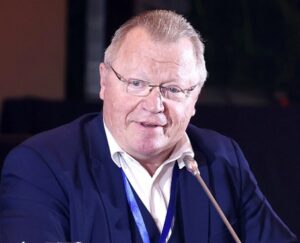
Between 1995 and 1998, he taught as a professor of international relations at Johannes Gutenberg University in Mainz, and in 1998 he was appointed to a chair in Chinese politics and international relations at Freie Universität, where he also headed the Center for Chinese and East Asian Politics. From 2001 to 2003, he served as dean of the Department of Political and Social Sciences at Freie Universität Berlin. From 2003 to 2016, in addition to his professorship at Freie Universität Berlin, he served as Otto Wolff Director of the Research Institute of the German Council on Foreign Relations (DGAP). Since 2014, he has been co-chair of the Bucerius Summer School on Global Governance at the Ebelin and Gerd Bucerius Foundation in Hamburg. Since leaving Freie Universität in October 2020, he has been a partner at Berlin Global Advisors, a consulting firm specializing in risk analysis and risk management for global investors. His academic work focuses on German foreign policy, transatlantic relations, politics in the Asia-Pacific region, and, in particular, the analysis of Chinese domestic and foreign policy.
He is the author, co-author, or editor of sixteen books and numerous academic articles and newspaper pieces. As a commentator, he is a sought-after guest on all major regional and national media outlets, including print, radio, and television.
(Photo: Prof. Sandschneider)
“Climate, Environment, and People: Asia’s Natural Landscapes in Transition”
Prof. Dr. Jussi Griessinger
University of Salzburg
Tuesday, January 12, 2027, 3:15–4:45 p.m.
Sigmund-Haffner-Gasse 18, 3rd Floor, Lecture Hall 888, Salzburg
The regions of Asia are characterized by an enormous diversity of ecosystems, ranging from very dry and cold to warm and humid natural environments, from high mountains to lowlands. At the same time, these regions have long been home to various cultural groups that, over the course of their history, have developed land-use systems highly adapted to these specific climatic conditions. The lecture provides an overview of these natural environments, examines their respective characteristics, and further illustrates how these environments are currently changing and (must) adapt in response to recent developments.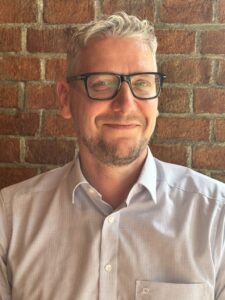
Jussi Griessinger, born in Stuttgart (Germany) in 1975, studied geography at the Universities of Stuttgart and Hohenheim, earned his doctorate at the University of Stuttgart, and completed his habilitation in physical geography at FAU Erlangen-Nuremberg. He has completed research stays at various academic institutions in China. On October 1, 2023, he succeeded Jürgen Breuste in the Department of Environment and Biodiversity. Prof. Grießinger teaches physical geography, focusing on climate geography, soil science, and biogeography.
(Photo: Private)
“Myanmar, Southeast Asia, and the Middle East”
(The exact title will be announced shortly)
Dr. Geoffrey Rathgeb Aunt
University of Vienna
Tuesday, January 19, 2027, 3:15–4:45 p.m.
Sigmund-Haffner-Gasse 18, 3rd Floor, Room HS 888, Salzburg
Geoffrey Aung is a postdoctoral research and teaching associate (Universitätsassistent) in the Department of Social and Cultural Anthropology at the University of Vienna. Situated at the intersection of political and economic anthropology, his research examines the aesthetics, politics, and historicity of large-scale infrastructure and logistics projects on Asia’s capitalist frontiers. Grounded in long-term fieldwork in Myanmar’s southern borderlands, his current book project is an ethnographic study of popular politics and political struggle surrounding a major deep-sea port and special economic zone project.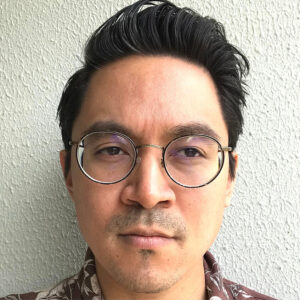
Having recently completed his Ph.D. at Columbia University, Geoffrey is also embarking on a new project at the University of Vienna tentatively titled *Total Images/Image Work*. It explores how still and moving images mediate political conflict under Myanmar’s new military regime, particularly along vital logistical trade corridors. Geoffrey’s research has been supported by the U.S. National Science Foundation, the Wenner-Gren Foundation, and a Fulbright Scholarship.
(Photo: © Univ.Wien_csm_Aung_fec1b9f4a4)