Keynote Speaker: Kate Foster
Reading from and Discussion of The King’s Witches
Kate Foster is an author based in Scotland. She writes historical novels that retell the stories of women of the past.
Her debut novel, The Maiden, was longlisted for The Women’s Prize for Fiction and won Bloody Scotland’s Crime Debut of the Year.
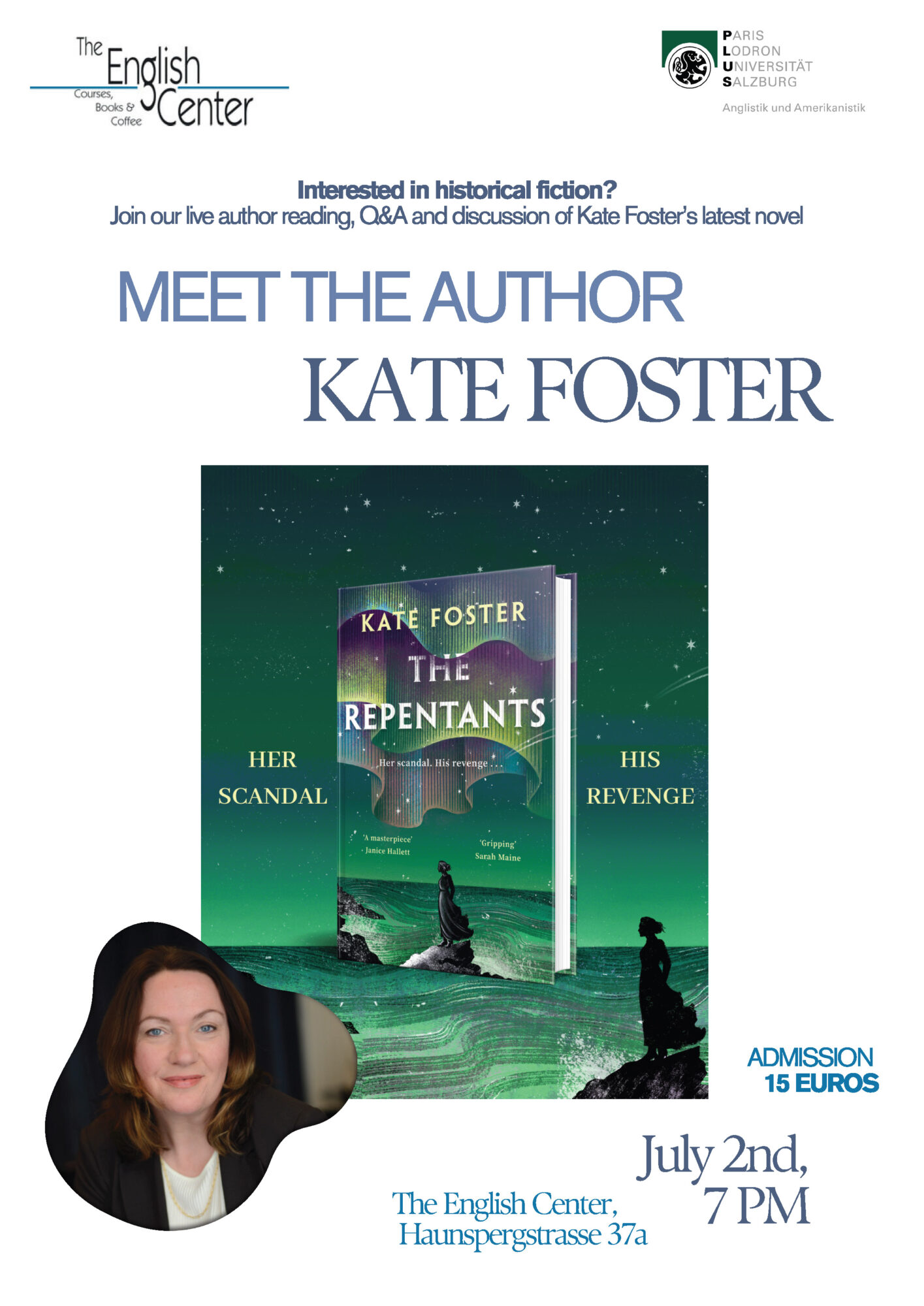
Her other novels include The King’s Witches, The Mourning Necklace and The Repentants.
A former journalist, she is often inspired by women who were either notorious, ignored or misrepresented in folklore or the history books.
Keynote Workshop: Sidonie Smith
A workshop on The Great Erasure of the Past
Engaging life stories, we gain access to a multiplicity of truths, capturing Timothy Snyder’s observation that “the truth we have to live in is not a single, comfortable one” (135 On Freedom). Yet, at the Smithsonian’s many museums, the Kennedy Center, and government websites, Trump World’s Great Erasure proceeds apace, its purpose to “cleanse” government institutions of the diversity of life narratives contributed to the national narrative over two hundred and fifty years. Scrubbing biographies, autobiographies, and self-portraits of diverse Americans, it would consolidate the power of a single white nationalist narrative of American democratic citizenship. In this context, what does the Humanities and, particularly the Field of Life Writing Owe Democracy? This workshop offers an opportunity to explore iconic life narratives (such as Franklin’s autobiographical writings and Douglass’s 1845 Narrative) and experimental forms of life writing such as the 2025 exhibit by Carrie Ann Baade entitled Birthplace and elicit how genres of life writing tell us expose the stakes of reanimating the past in a fragile and troubled, increasingly illiberal democracy. In life writing classrooms, students learn through close reading of texts of many media and modes about the corrupting influence of a concept of negative rather than positive freedom; the toxicity of fantasies of radical individualism; the distortions of language contributing to the erasure of the realities of unfreedom, irresponsibility, and inequality; and the harms released by an attachment to a single voice as representative and a single version of the past as adequate for navigating these times. What the humanities owe democracy, what life writing studies owes democracy, is this passion, this ethics, and this practice of illuminating fissures in the ongoing drama of democratic governance in the context of contested uses of the past.
Sidonie Smith is the Lorna G. Goodison Distinguished University Professor Emerita of English and Women’s and Gender Studies, University of Michigan, and Past President of the Modern Language Association of America (2010). Her publications include A Poetics of Women’s Autobiography: Marginality and the Fictions of Self-Representation (1987), Subjectivity, Identity, and the Body: Women’s Autobiographical Practices in the Twentieth Century (1993), and Manifesto for the Humanities: Transforming Doctoral Education in Good Enough Times (2015). With Kay Schaffer, she coauthored Human Rights and Narrated Lives (2004). With Julia Watson, she has co-authored three editions of Reading Autobiography: A Guide to Interpreting Life Narratives (2001, 2010, and 2024 (as Reading Autobiography Now). Their 2017 book, Life Writing in the Long Run: A Smith & Watson Autobiography Studies Reader, is available in open access.

Additional Event
In addition to the keynote lecture, a separate event with Kate Foster will be held at The English Center (admission 15 EUR); please refer to the flyer below for details.