AMBRA News and Activities
 CONFERENCE PARTICIPATION 16–18 September 2026
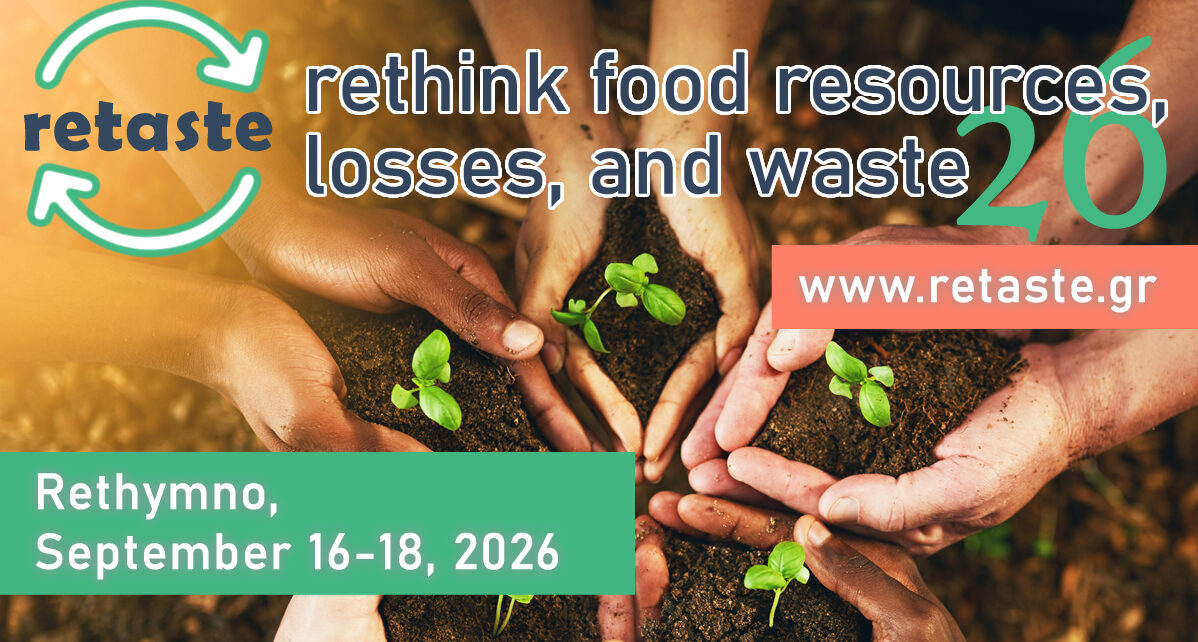
AMBRA at the RETASTE Conference in Greece
We are delighted that our contribution, “Towards an Integrated Life Cycle Sustainability Assessment Framework for Small-Scale Alpine Biorefineries Based on Agricultural Side Streams,” has been accepted for presentation at the 6th International RETASTE Conference in Rethymno, Greece, taking place from 16–18 September 2026.
Our presentation will be featured in the session on Life Cycle Assessment (LCA) and Social Life Cycle Assessment (S-LCA) along the Farm-to-Fork value chain.
The paper demonstrates how the sustainability of small-scale, decentralized biorefineries in Alpine regions can be assessed in a comprehensive manner. The developed framework integrates environmental, economic, and social criteria while also incorporating the perspectives of regional stakeholders. In doing so, the research supports the sustainable utilization of agricultural side streams, the development of innovative bio-based products, and the strengthening of regional value chains.
#CircularEconomy #FoodWaste #LCA #Sustainability
MEETING – May 12, 2026
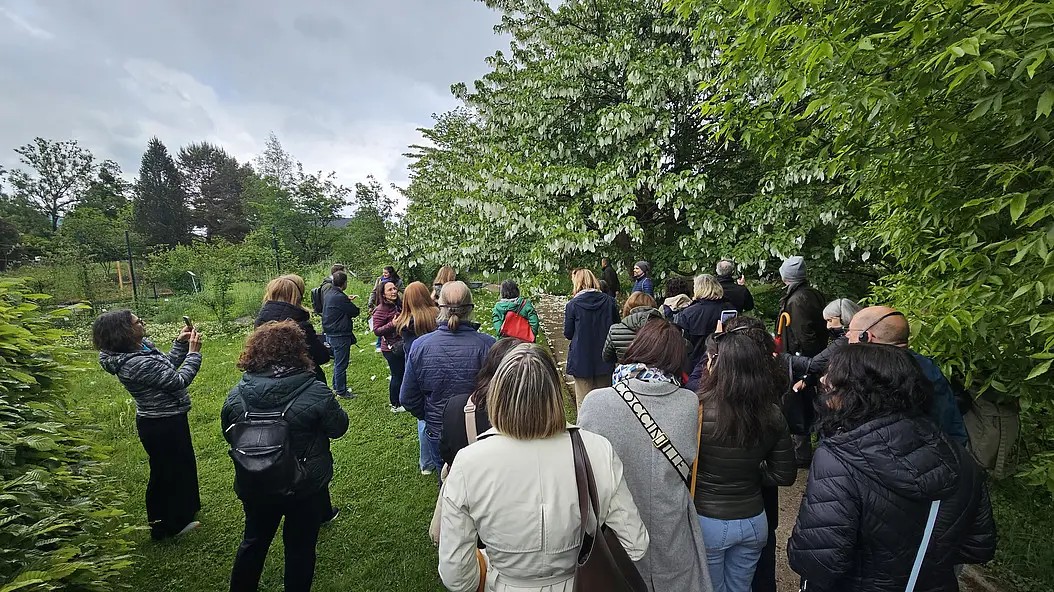
Visit of the Interreg Monitoring Committee in Salzburg
On May 12, the Interreg Monitoring Committee – this body oversees and ensures the effectiveness and quality of the implementation of the Interreg programme – visited the University of Salzburg. Following an informative accompanying programme, during which the Botanical Garden of the Faculty of Natural and Life Sciences was toured, showcasing its diverse sections such as the medicinal herb garden, farmhouse garden, alpine garden (Alpinum), as well as raised bog, fen, and dry grassland areas, the Italian-Austrian group moved on to the University’s premises in Freisaal. There, Prof. Christine Vallaster presented the progress, results, and future outlook of the Interreg project AMBRA. This was followed by a Q&A session and further discussions.
LONG NIGHT OF RESEARCH – April 24, 2026

Long Night of Research
AMBRA will be participating in the Long Night of Research on April 24, 2026, at the Salzburg University of Applied Sciences (FH Salzburg) in Puch-Urstein.
EVENT – April 16, 2026
Removal of Invasive Species Along the Saalach River
For several years now, dedicated volunteers have been gathering along the Saalach River to remove invasive species from the riverbanks. This time, project staff from the Interreg Italy-Austria AMBRA project at the University of Salzburg and the Salzburg University of Applied Sciences also participated.
Invasive non-native plants (giant hogweed, glandular impatiens, Canadian goldenrod, Japanese knotweed, etc.) spread very quickly because, unlike native plants, they have few or no species-specific pests and diseases due to their non-native status: They spread virtually “without natural predators.” And this is not without consequences:
- Displacement of native plant species and thus a reduction in biodiversity
- Health risks for humans and animals (allergic reactions, severe skin irritations, etc.)
- Economic damage (loss of agricultural yields, costs for control/removal, …)
In recent years, renaturation and river widening measures for flood protection have been carried out along the Saalach in the area of the municipality of Wals-Siezenheim (south of the Siezenheim footbridge, river kilometer 5.3–7.3). The project culminates in the (re)vegetation of the riverbanks using native seeds. However, the invasive neophyte populations along the banks first had to be contained.
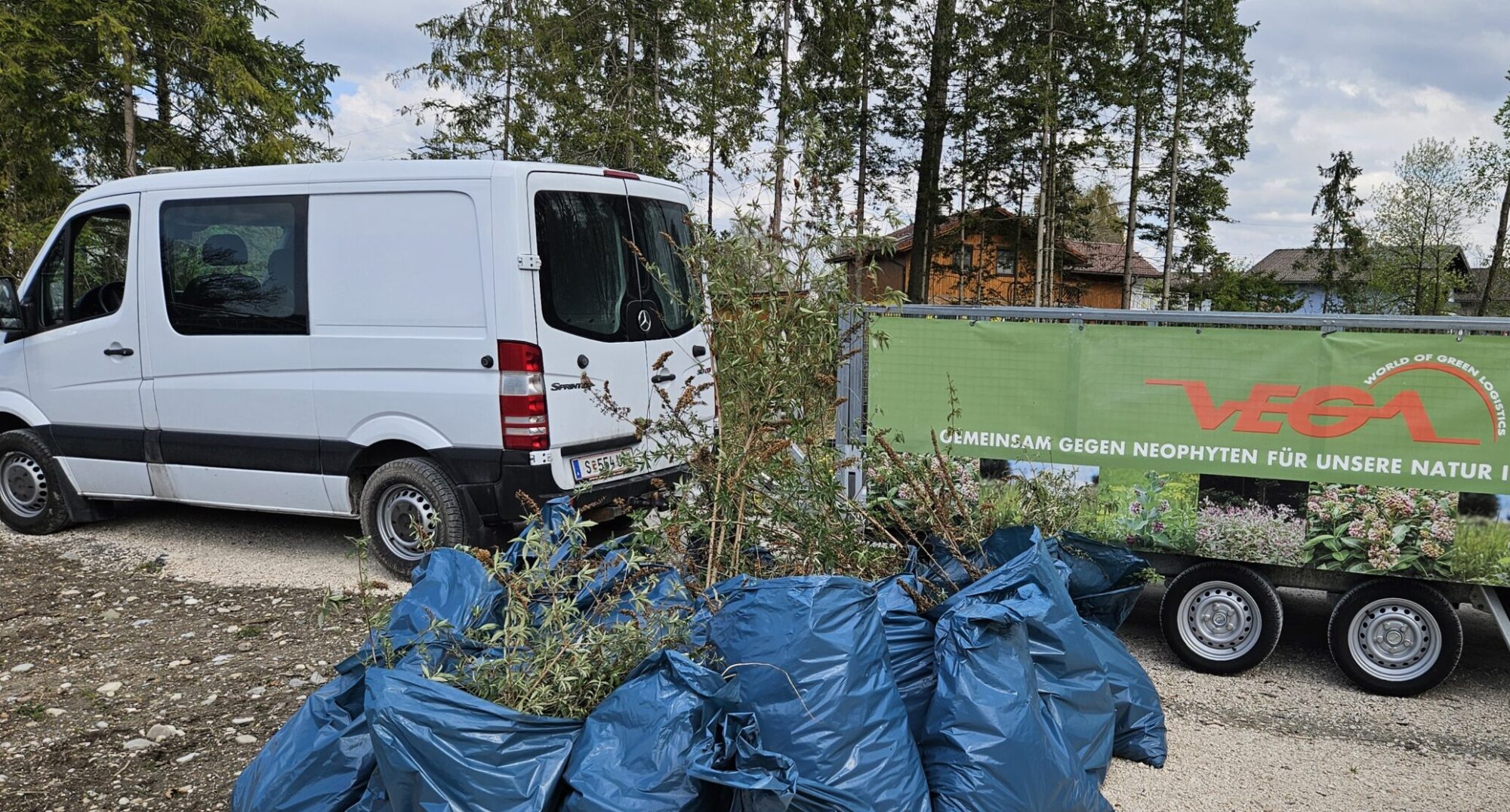
On April 16, a group of approximately 30 people (students and teachers from the Hallein Fashion School, staff from the Mountain and Nature Guard, members of the Austrian Armed Forces, and staff from the AMBRA project) – supported by Karin Juriga ( waste and environmental consultant for the municipality of Wals-Siezenheim), the Walser transport and logistics company VegaTrans, and the State of Salzburg—gathered for a neophyte removal campaign along the Saalach River.
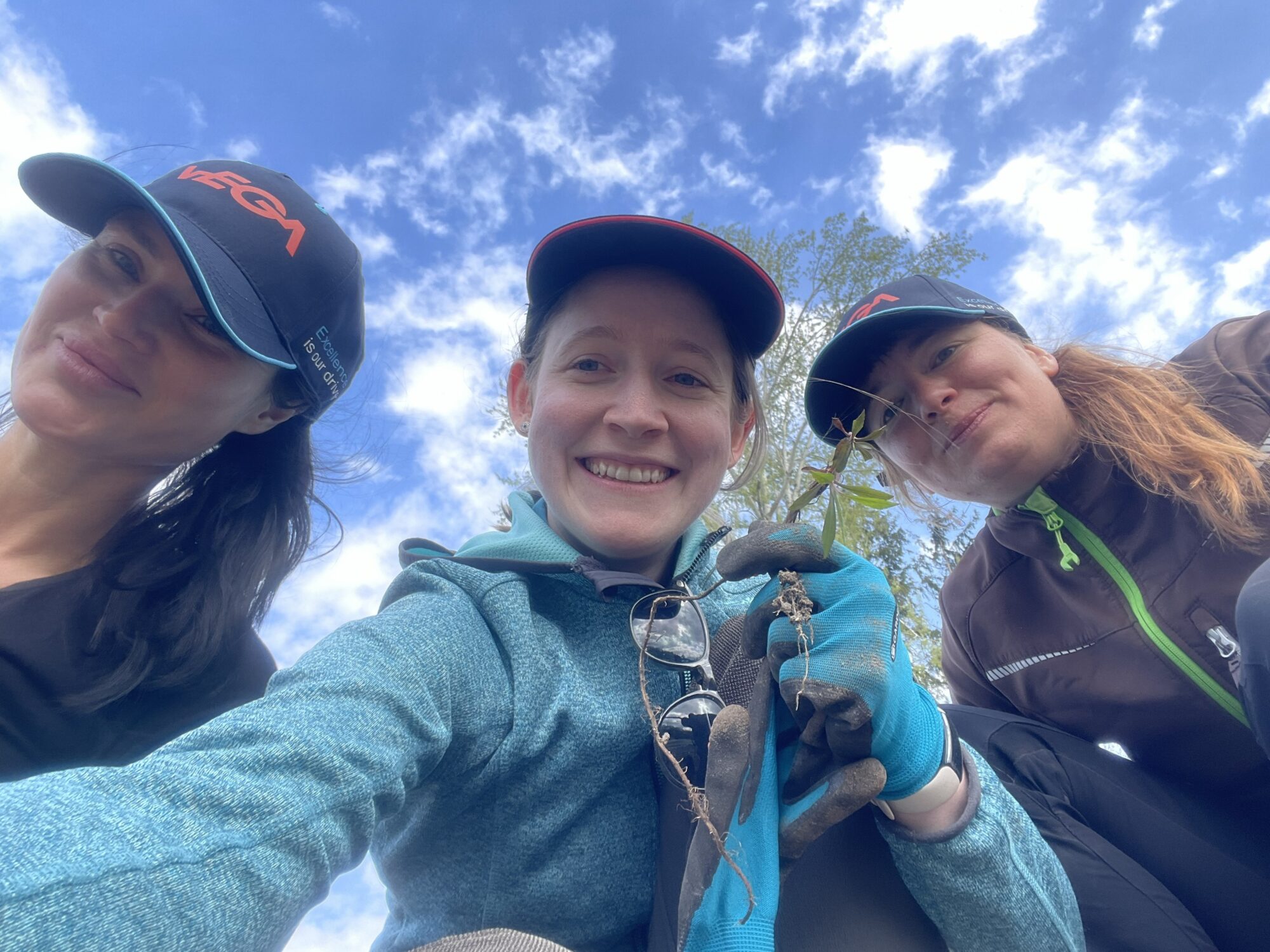
For the AMBRA project, however, this afternoon served another purpose: data and information were collected for the potential economic use of invasive plant species in biorefineries. And to put the circular economy into practice right away, some of the collected invasive plant species (goldenrod) were not disposed of but transported to the Hallein Fashion School for textile dyeing experiments.
WORKSHOP – March 26, 2026
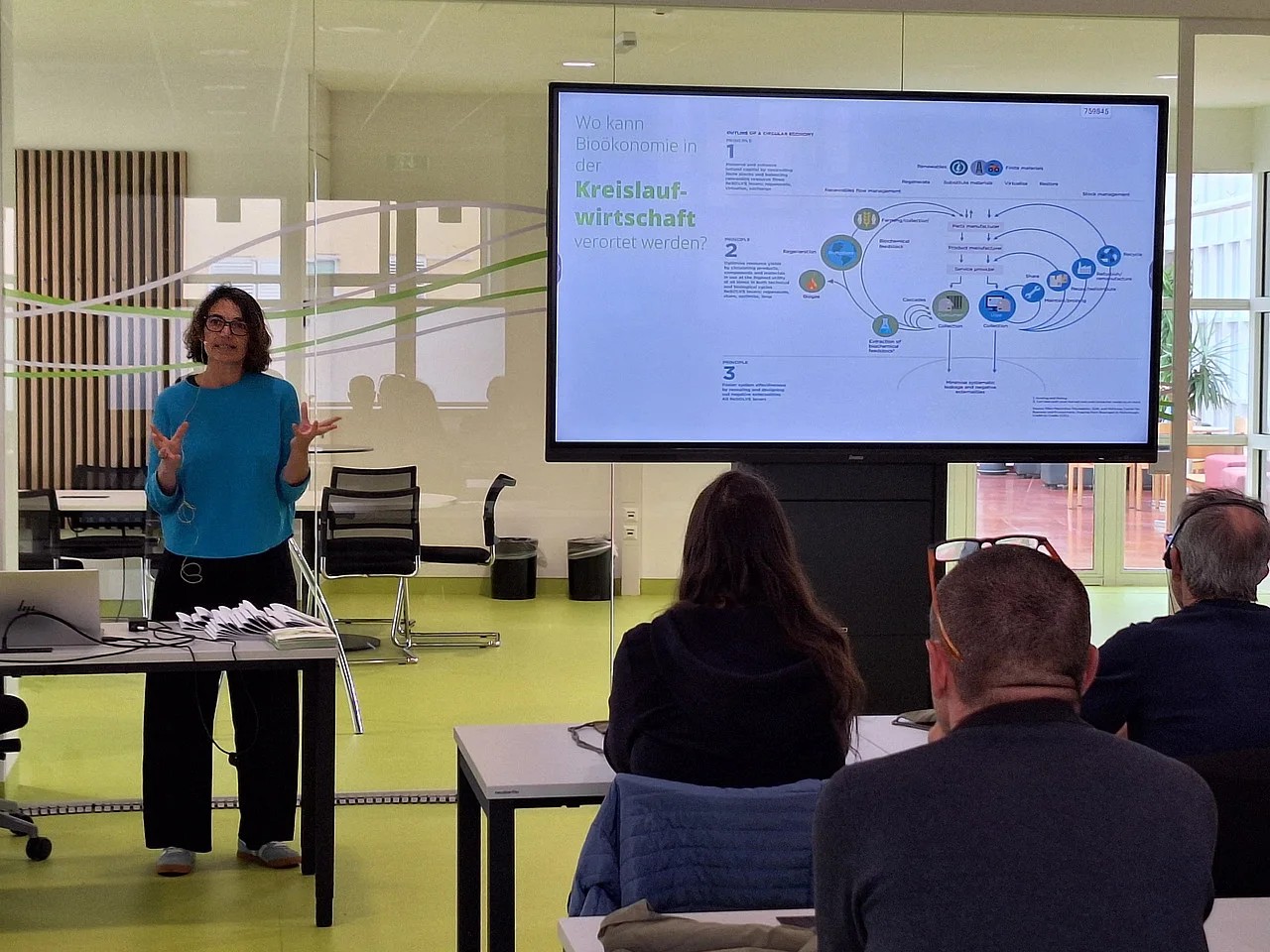
Rethinking Biomass: The Bioeconomy in Salzburg
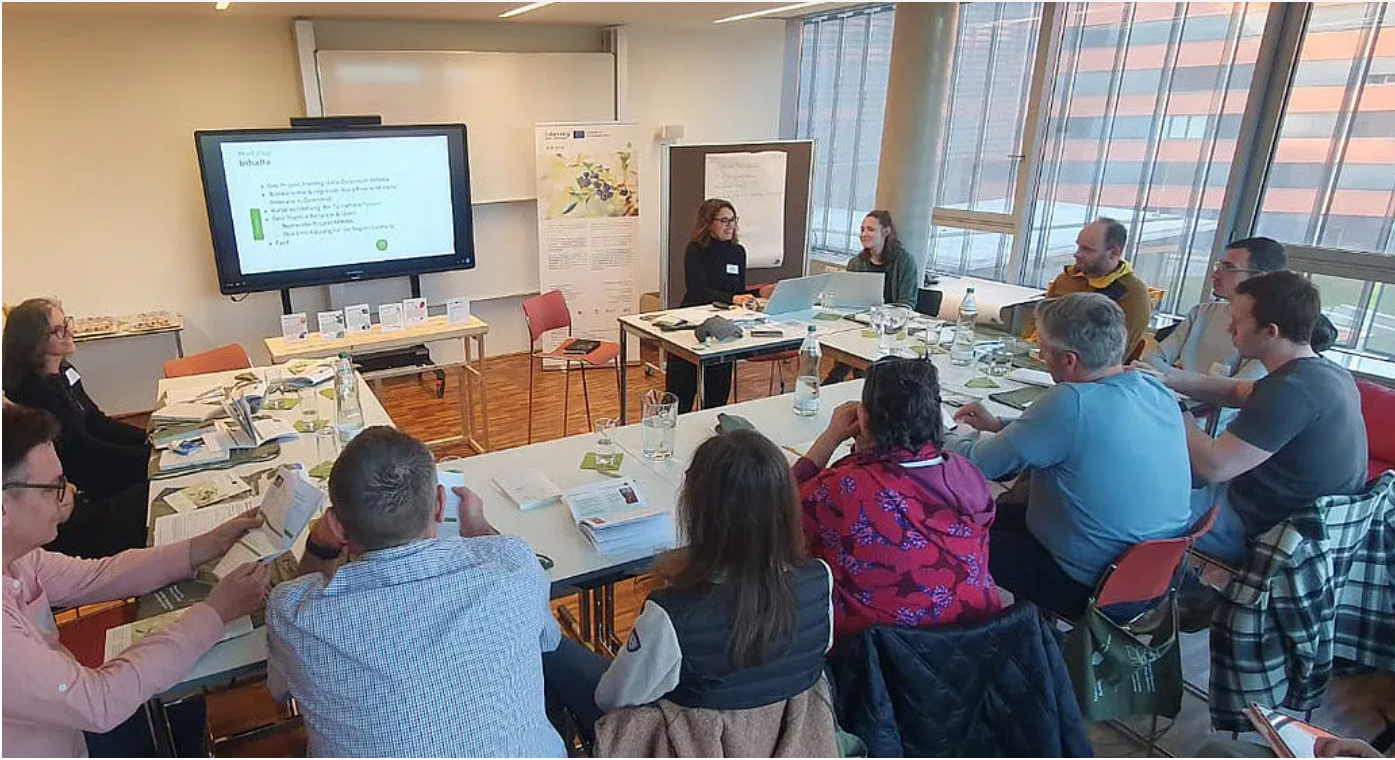
As part of the Interreg Italy-Austria AMBRA project, the University of Salzburg and the Salzburg University of Applied Sciences invited scientists and practitioners from various disciplines on March 24, 2026, to discuss innovative approaches to the sustainable use of regional biomass.
Following a keynote presentation on the bioeconomy and biorefineries, participants jointly discussed opportunities for (new) business models, biodiversity aspects, and raw material flows, as well as the challenges, potential risks, and barriers facing the bioeconomy. The interdisciplinary composition of the participants (from agriculture, municipalities, waste and environmental consulting, schools, and associations) yielded new perspectives and interesting networking opportunities on this topic. The results of the workshop will be incorporated into the measures of the AMBRA project.
We would like to sincerely thank all participants for their contributions to the discussion!
PROJECT MEETING – March 16–17, 2026
Third Project Meeting in Friuli-Venezia Giulia
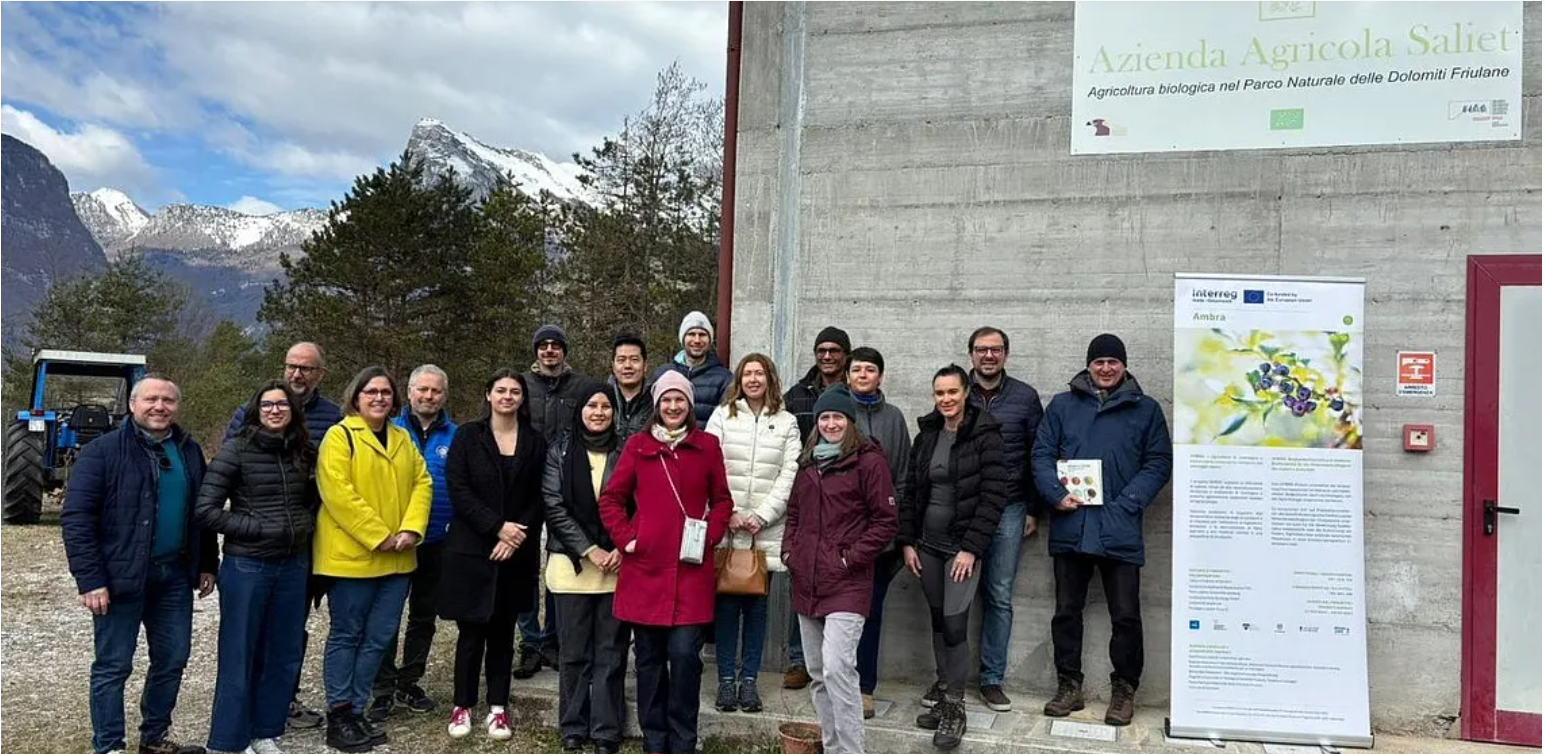
The first day in Barcis, located on the edge of the Dolomiti Friulane Nature Park, was dedicated to an in-depth discussion among the project partners regarding milestones achieved, as well as the coordination of further measures and activities. On the second day, the group visited an organic farm in Claut. The project partners learned about sustainable cultivation and management methods in the Alpine region, opportunities for the cascading use of raw materials and the production of related products, as well as important information on funding and marketing opportunities for small-scale, diversified mountain agriculture. The group then traveled to Cimolais, where an agricultural revitalization project is being planned as part of the AMBRA project..
We would like to thank the partner institutions Fondazione Agrifood & Bioeconomy FVG and GAL Montagna Leader for organizing the project meeting, as well as all project partners ( Fondazione Agrifood & Bioeconomy FVG, GAL Montagna Leader, Free University of Bozen-Bolzano, University of Innsbruck, Salzburg University of Applied Sciences, University of Salzburg) for the constructive dialogue.
We would like to sincerely thank all participants for their contributions to the discussion!
JOB POSTING – February 20, 2026

Support for the Analysis of Enviromental Indicators
Joint Call for Applications by the University of Salzburg & Salzburg University of Applied Sciences
As part of the Interreg Italy-Austria project AMBRA, we are currently seeking a dedicated expert (m/f/d) to provide technical support to the project team in the analysis of environmental indicators—specifically, life cycle assessment. Further details regarding the job posting can be found at this link: Ausschreibung_Externe_Expertise_Ökobilanzierung
BROCHURE
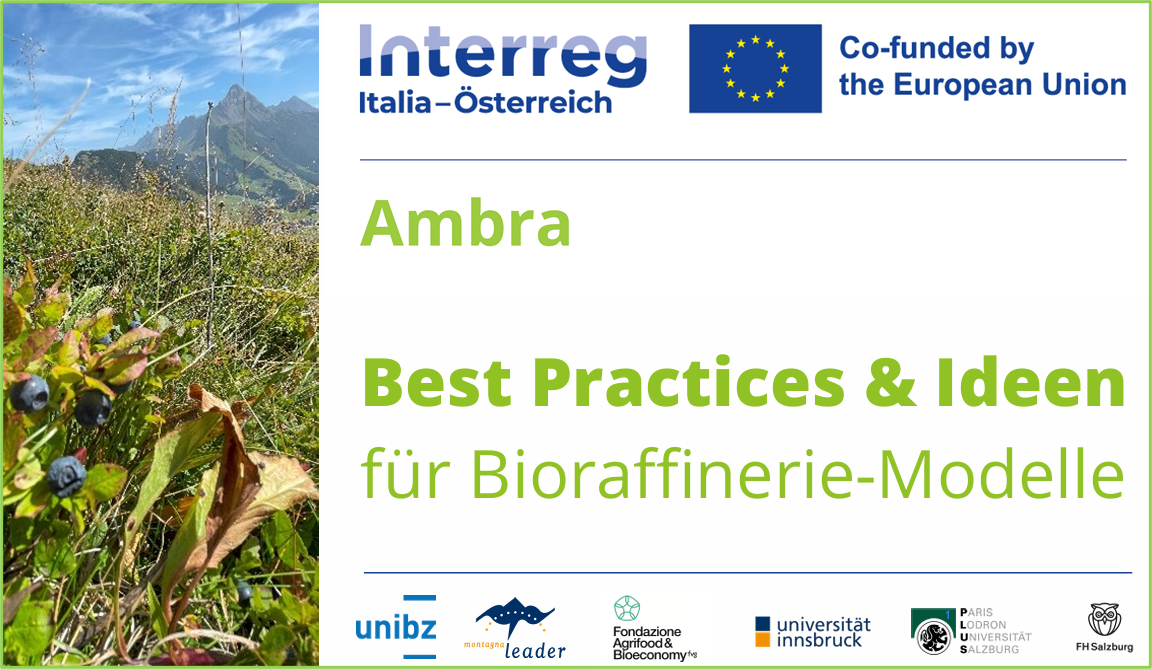
Brochure: Best Practices & Ideas for Biorefinery Models
This brochure, developed as part of the Interreg Italy-Austria AMBRA project, presents a diverse collection of innovative biorefinery models from the Alpine region and beyond. The selected best-practice examples demonstrate how agricultural and forestry byproducts, food waste, or plant biomass can be transformed into high-quality products such as natural dyes, textile fibers, cosmetics, food ingredients, or renewable energy. The brochure provides an overview of effective approaches to the circular bioeconomy, highlights opportunities for regional value creation, and serves as a practical guide for businesses, municipalities, and initiatives looking to develop their own sustainable utilization concepts.
Interested? Click here for the AMBRA_Brochure_Best_Practices!