Welcome in the working group Evolutionary Zoology
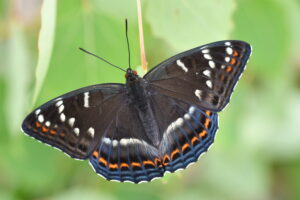
We work on topics in the fields of evolutionary zoology and conservation biology. A key focus of our group is how animals – particularly insects and birds – respond to environmental changes and stress and adapt to them rapidly. Our research sites are located in and around Salzburg (the city and the Alps) as well as in the tropics (sub-Saharan Africa). The central methodological approaches are: Community ecology/trait-based, genomics (phylogenomic and population genomics), phylogenetics, geometric morphometrics, species distribution models and habitat suitability models, telemetry, ecophysiology, behavioral biology, and bioacoustics. A central focus of our research group is working with historical (collection) data to evaluate current conditions and predict future trends. In doing so, we consider various levels of biodiversity, ranging from intraspecific diversity (museomics) to the structure of species communities.
Head:
Univ.-Prof. Dr. Jan Christian Habel
Selected work:
Apfelbeck B, Cousseau L, Kung’u GN, Canoine V, Heiskanen J, Korir DK, Lala F, Pellikka P, Githiru M, Lens L (2024) Cooperative breeding alters physiological and behavioral responses to habitat fragmentation. iScience 27(1). https://doi.org/10.1016/j.isci.2023.108717
Eberle J, Bazzato E, Fabrizi S, Rossini M, Colomba M, Cillo D, Uliana M, Sparacio I, Sabatinelli G, Warnock RCM, Carpaneto G, Ahrens D (2018) Sex-Biased dispersal obscures species boundaries in integrative species delimitation approaches. Systematic Biology 68:321–353. https://doi.org/10.1093/sysbio/syy072
Eberle J, Ahrens D, Mayer C, Niehuis O, Misof B (2020) A Plea for Standardized Nuclear Markers in Metazoan DNA Taxonomy. Trends in Ecology & Evolution 35: 336-345. https://doi.org/10.1016/j.tree.2019.12.003
Habel JC, Schmitt T, Gros P, Ulrich W (2023) Active around the year: Butterflies and moths adapt their life cycles to a warming world. Global Change Biology 30: e17103. https://doi.org/10.1111/gcb.17103
Habel JC, Trusch R, Karbiener O, Schmitt T, Ulrich W (2026) Losses of specialist and expansion of thermophilic generalist macro-moths in nature reserves of Central Europe. Biological Conservation 314: 111646. https://doi.org/10.1016/j.biocon.2025.111646
Kung’u GN, Cousseau L, Canoine V, Heiskanen J, Githiru M, Njoroge P, Pellikka P, Habel JC, Lens L, Apfelbeck B (2026). Forest degradation and weather jointly affect early-life development in a tropical understory Bird. Global Change Biology 32(3): e70771. https://doi.org/10.1111/gcb.70771