DOCTORAL PROGRAMME AT THE FACULTY OF DIGITAL AND ANALYTICAL SCIENCES
| Apply now |  |
| Course Duration/ ECTS | 6 semesters / 180 ECTS |
| University degree | Doktor/in der technischen Wissenschaften (Dr. techn.) Doktor/in der Naturwissenschaften (Dr. rer. nat.) oder Doktor/in der Philosophie (Dr. phil.) |
| Admission Requirements and Curriculum | · Applicants must hold a Bachelor’s and a Master’s degree in the same or comparable subject from a university, a ‘Fachhochschule’ (advanced technical college) or a comparable degree in an equivalent or related field from an accredited Austrian or foreign institute of higher education. · Supervisor Commitment · Curriculum |
| Language of instruction German/English | Proof of language proficiency |
| Dates and Deadlines | · The dates and deadlines change every semester. · The current deadlines and dates can be found here. |
| Faculty | Faculty of Digital and Analytical Sciences (DAS*) |
Information on the approval procedure:
You must (§1a Abs2)
a) demonstrate adequate subject and methodological knowledge with regard to the intended doctoral studies and with regard to the intended subject area of the dissertation as well as
b) demonstrate motivation and scientific potential for the realization of the planned scientific work and the possibility of embedding the project in a current research area of the University
To do this, please download the form “Confirmation of Supervision” here and fill in the “Applicant Details”.
In addition, we need your
– Curriculum vitae, including a list of publications and any evidence of previous professional experience, e.g. research activities, if this results in a special qualification with regard to the prospective dissertation project. (one page)
– Letter of motivation with regard to the applicant’s personal suitability for doctoral studies at the university. (max. 500 words)
– Description of the dissertation project, with working title and in consultation with the future supervisor and his / her confirmation by signing the description (max. 500 words)– Documents relating to previous degrees (certificate, award letter, curriculum, diploma supplement, transcript of records)
Contact: Deborah Neureiter B.rer.nat.
Doctoral Programme at Faculty of Digital and Analytical – University Salzburg
What will I learn?
Graduates of the doctoral programme at the Faculty of Digital and Analytical Sciences have a profound knowledge of the current state of international research in the field of their dissertation and a good understanding of related fields of research. They are able to work independently with relevant scientific questions and to publish the results of their work in the various media of international science. They are qualified to develop new ideas and methods for research, the industry and further domains of applications, as well as to promote and guide the new generation of scientists. They serve as models of scientific and professional integrity. The instruction in original research and in the building of hypotheses in the face of complex questions, and in developing the ability to think independently in the face of established doctrines, is particularly important.
What makes Salzburg so special as a place to study?
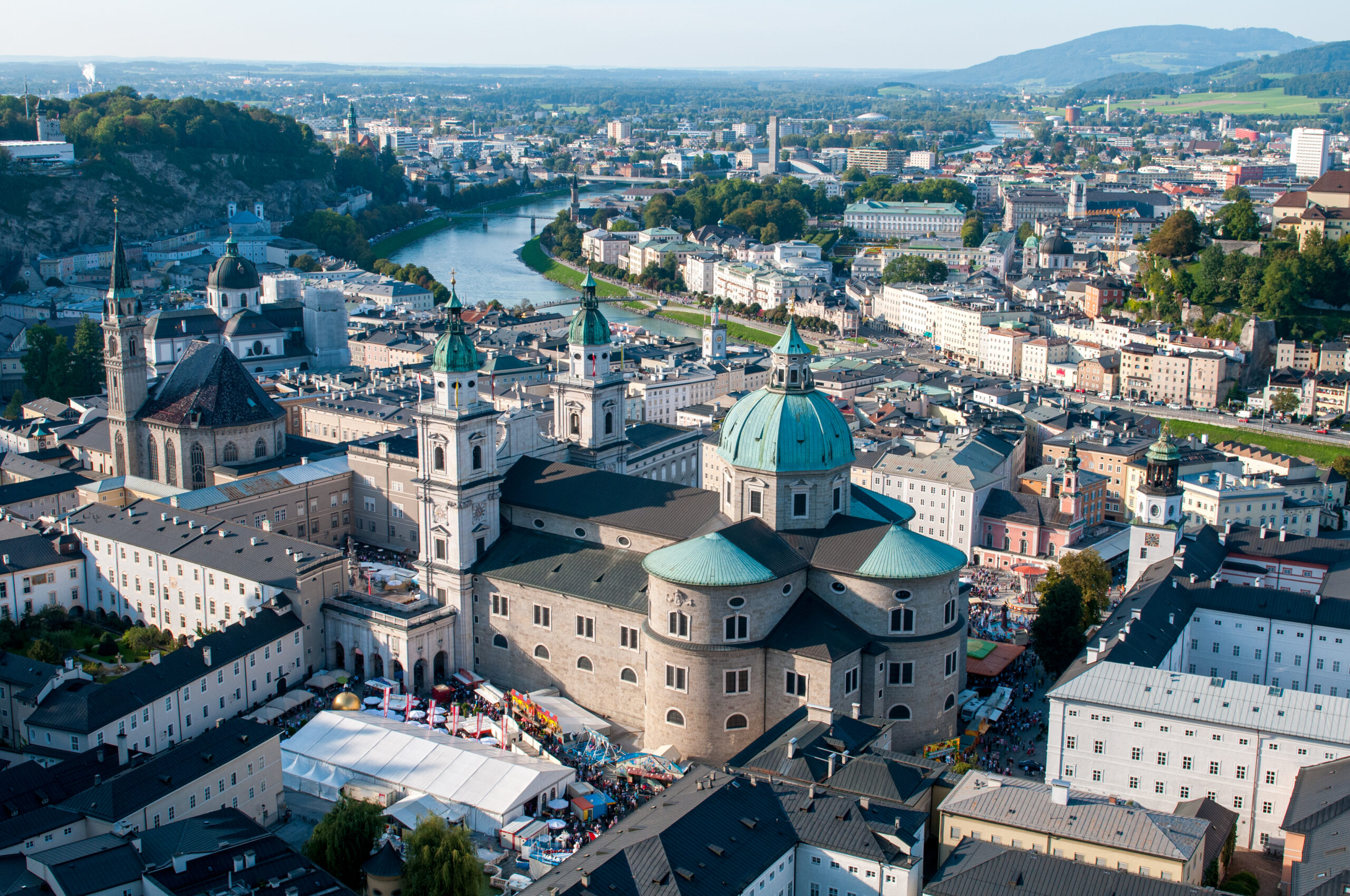
Its location alone makes the Paris Lodron University of Salzburg one of the most beautiful universities in the world. With its six faculties it offers the intellectual surroundings for a profound and interdisciplinary debate of current research questions. This provides graduates of the Paris Lodron University of Salzburg with an eminent advantage in comparison with other places of research, which are certainly demanding, but one-dimensional. Furthermore, doctoral students in Salzburg benefit from an exceptionally considerate individual support.

Which career opportunities do I have?
A doctorate at the Faculty of Digital and Analytical Sciences qualifies graduates for leading professional positions at universities, advanced technical colleges, public institutions and business enterprises. In particular, graduates are able to provide intelligent answers and possible solutions to our time's complex questions of society and science.
Photographs: © Hans-Christian Gruber (1) I © Simon P. Haigermoser (2) I © iStock.com/mpalis (3) I © iStock.com/martin-dm (4)