Published on
October 20, 2026
Last update: October 20, 2026
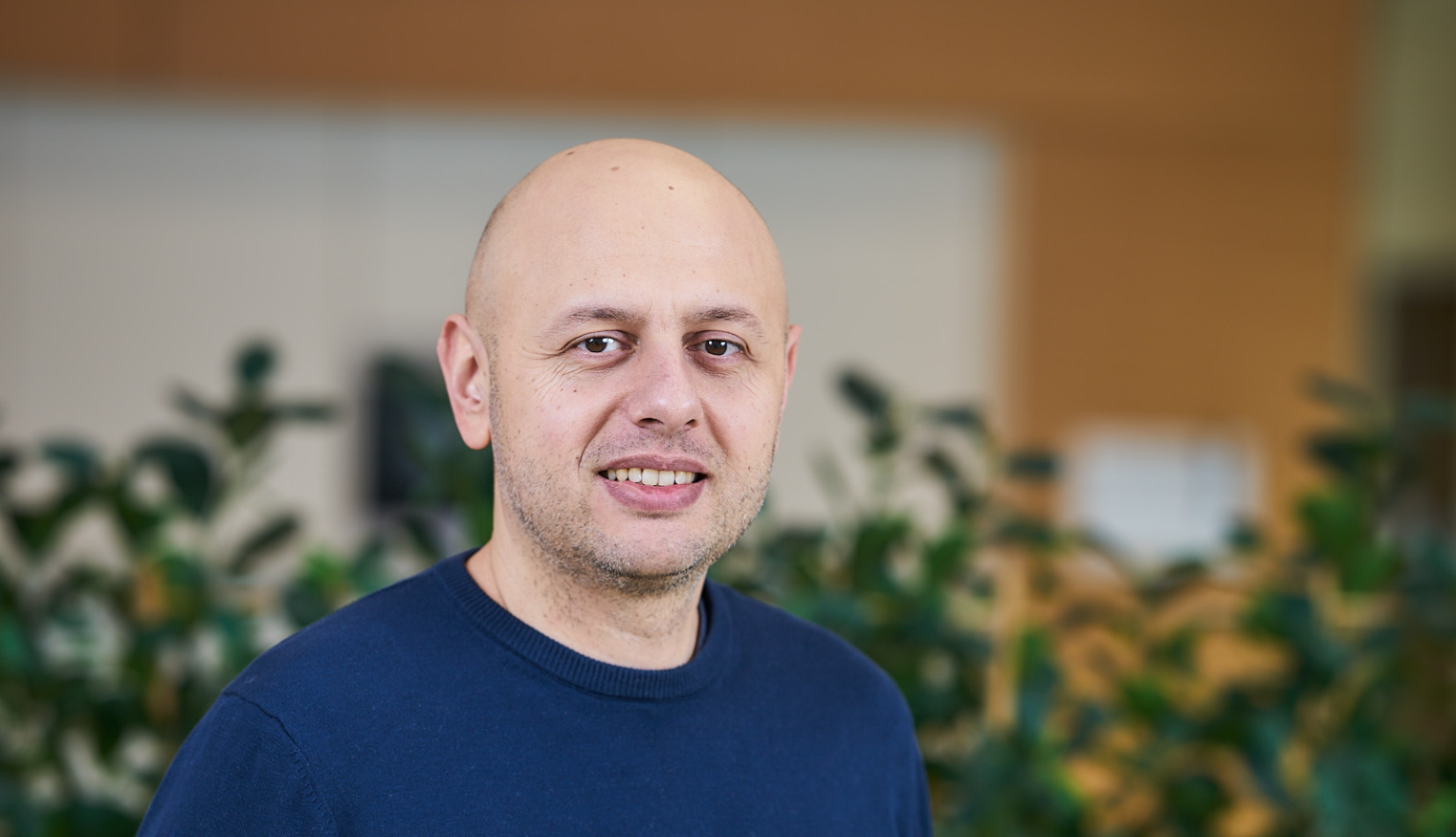
Ivan Bedzhov: New Professor at the University of Salzburg: Internationally Recognised Expert Investigates the Earliest Stages of Life
Involuntary childlessness affects around one in six people worldwide and remains one of the major challenges of modern medicine. Despite significant advances in reproductive medicine, the successful implantation of an embryo into the uterus continues to be one of the greatest obstacles on the path to pregnancy.
With Dr Ivan Bedzhov, the University of Salzburg is welcoming an internationally recognised expert whose research focuses precisely on these fundamental biological processes.
Ivan Bedzhov studied Molecular Biology at the University of Sofia before completing a Master’s degree in Genetic and Cell Engineering. He subsequently moved to Germany to pursue his scientific career and was awarded his PhD by the Max Planck Institute of Immunobiology and Epigenetics in 2011. During his doctoral studies, he developed a particular interest in early embryonic development and the mechanisms through which cells communicate with one another to coordinate the development of a new organism.
His scientific career then took him to the renowned Gurdon Institute at the University of Cambridge, where he worked as a postdoctoral researcher investigating how embryos acquire complex shapes and structures during the earliest stages of development. In 2015, he established his own research group at the Max Planck Institute for Molecular Biomedicine in Münster.
Since then, his research has focused on understanding how a complex organism develops from a single cell and how embryos interact with their maternal environment.
At the University of Salzburg, Bedzhov will investigate the biological processes that shape the very beginning of life. One of his main research interests is the self-organisation of cells during early embryonic development. He examines how complex tissues and structures gradually emerge from a single fertilised egg cell. A deeper understanding of these processes may provide important insights into the causes of early pregnancy loss and the origins of developmental disorders.
A second area of focus is the communication between the embryo and the mother during early pregnancy. His research explores how the embryo implants in the uterus, interacts with maternal tissues and communicates with cells of the immune system. As fertility declines significantly with age, he will also investigate how these interactions change over the course of ageing. In the long term, these findings could contribute to improving fertility treatments and increasing the chances of a successful pregnancy.
In addition, Bedzhov studies a fascinating biological phenomenon known as embryonic diapause. During this state, embryos can temporarily pause their development and resume it at a later stage. Research into this process may open up new possibilities for embryo preservation. It may also provide valuable insights into other areas of medicine, including the biology of dormant cancer cells.
In teaching, Bedzhov will initially focus on providing students with a strong understanding of the fundamental cellular and molecular mechanisms that underpin physiological processes, including how organisms develop and become organised. In the future, he plans to offer specialised courses in reproductive biology, early mammalian development, stem cell biology, genetic technologies, medically assisted reproduction and in vitro fertilisation.
Bedzhov places particular emphasis on fostering scientific curiosity, critical thinking and enthusiasm for discovery among students. “Teaching and research should always convey a sense of wonder about the unknown. Students should feel encouraged to ask questions, explore new ideas and find their own path towards scientific discovery,” says Bedzhov.
His decision to join the University of Salzburg was influenced in particular by its outstanding scientific opportunities, the possibility of building new research initiatives and its collegial environment. He was especially impressed by the openness, commitment and international outlook of the University.
Ivan Bedzhov is married and the father of two children. In his free time, he enjoys spending time with his family, reading sci-fi and fantasy novels, and playing video games.
The University of Salzburg warmly welcomes Ivan Bedzhov and congratulates him on his appointment.
CONTACT:
Univ. Prof. Dr. Ivan Bedzhov | Biosciences and Medical Biology
Hellbrunner Straße 34 | 5020 Salzburg | Austria
E-Mail: