Dr. Maximilian H. Ganser | PostDoc, Projektmitarbeiter | PLUS-Research | ORCID
Hellbrunnerstr. 34, Raum: E-2.086, 5020 Salzburg
Tel.: +43 (0) 662 / 8044-5615
E-Mail: RESEARCH
My research explores the hidden world of planktonic protists across molecular, cellular, species, and ecosystem levels. These fascinatingly diverse unicellular organisms are essential for aquatic ecosystems and global energy fluxes yet are heavily understudied. Beyond biodiversity and ecological roles, protists offer untapped potential as study systems for novel biological processes, from unusual genomic architectures and life cycles to unique protein functions and organelles that make them both versatile and highly sensitive to environmental change.
I currently focus on tintinnid ciliates, which build intricate and remarkably resilient shells whose composition has remained a mystery so far. My recent work combines advanced microscopy, single-cell omics, and bioinformatics to uncover how these tiny architects create their shells ( FWF project P35736).
INTEGRATIVE EUKARYOTIC MICROBIOLOGY
How do single cells build shells?
Detailed volumetric and ultrastructural analyses during the cell cycle revealed how much shell-forming material is produced, how it matures, and how it is secreted, offering the first comprehensive picture of shell construction in tintinnid ciliates.
Currently, I analyze the proteome of the tintinnid Schmidingerella employing single-cell omics and AI-based prediction models.

[DOIs:] Volumetric dynamics of shell material | Maturation and secretion of shell material
[Funding:] FWF Project P35736
Combining morphological and molecular data
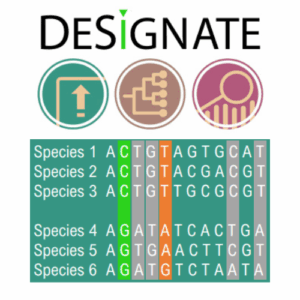 DeSignate (freely accessible via web-interface or source code) identifies, ranks, and visualizes molecular signature characters for diagnoses. We applied it to improve the taxonomy in Oligotrichea (tintinnid ciliates and relatives) by integrating molecular and morphological data. Since its release, it has also been widely adopted across other organismal groups (mainly animals).
[DOIs:] DeSignate | Molecular signature characters
[Funding:] FWF Project I3268
Discovering and describing diversity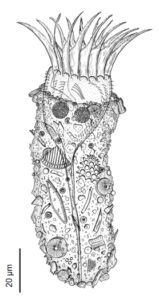
Microscopy and morphometrics led to the discovery of the tintinnid genus Antetintinnidium, expanding known tintinnid diversity and highlighting the importance of cytological features in addition to shell features for a natural classification.
[DOIs:] New tintinnid genus | Type species in taxonomy
[Funding:] FWF Project I3268
New ultrastructural features to resolve phylogenetic relationships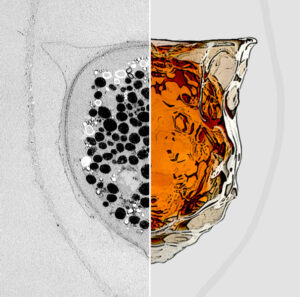
Transmission electron microscopy revealed nanoscale extrusomes and resting cyst features that help to resolve phylogenetic relationships within tintinnid ciliates and among their close relatives.
[DOIs:] Extrusomes in tintinnids and oligotrichs | Tintinnid cysts
[Funding:] FWF Project I3268
An ecosystem-view on marine planktonic ciliate diversity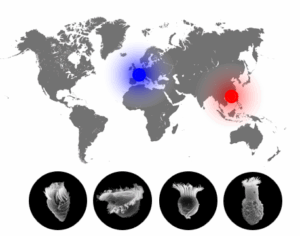
Using metabarcoding and network analysis, we revealed distinct genetic communities of marine planktonic ciliates in Chinese vs. European coastal waters, challenging the long-held “everything is everywhere” paradigm.
[DOIs:] Genetic diversity of marine planktonic ciliates
[Funding:] FWF Project I3268