The IL-6/SAA-Axis in the hepatic tumour niche
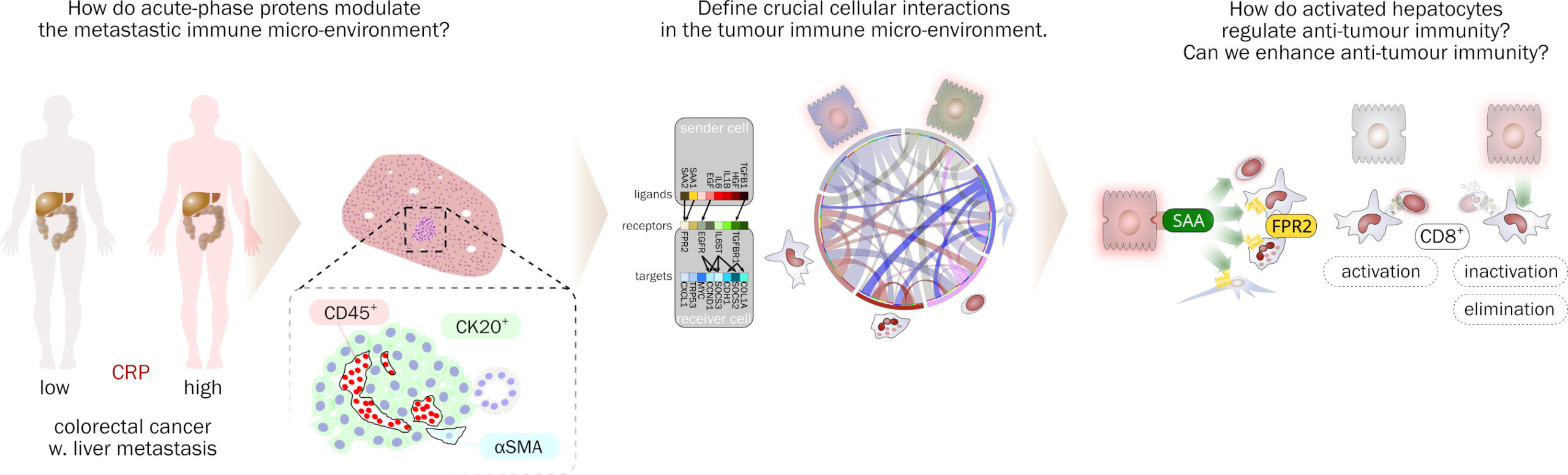
The liver is a common site of primary cancer formation and metastatic colonization, which is linked to its unique immune micro-environment. Clinical data demonstrate that increased acute-phase protein (APP) levels are linked to poor prognosis of cancer patients. We recently developed a novel mouse model of cell-autonomous activation of the IL-6/GP130 module. We demonstrated that hepatocyte-specific activation of GP130 is sufficient to trigger a robust innate immune response. This includes (I) expression of acute-phase proteins, in particular serum amyloid A (SAA), (II) phenotypic alterations of Kupffer cells and, (III) recruitment of neutrophil granulocytes.
We hypothesize that IL-6 and APPs promote the formation of a tumor-permissive immune niche in the liver and represents a potential target for the therapy of malignant liver disease. Therefore, we would like to address (I) how hepatocyte-specific IL-6 pathway activation and acute-phase proteins affect innate and adaptive immunity in the liver, (II) if hepatocyte-restricted IL-6 pathway activation is sufficient to promote hepatocarcinogenesis and (III) if IL-6 pathway activation and acute-phase proteins promote metastasis to the liver.
This project is funded by:

Grant-DOI: 10.55776/PAT5373723
PhD students in this project:
Freia Krause
PhD student
IL-6/SAA in primary hepatic cancer

Birgit Halwachs
PhD student
IL-6/SAA in liver metastasis